
Reviewed · CITY TOURS
Full Day Amman Old and New Private City Tour
Amman rewards a curious eye. This private tour links ancient ruins with museums, mosques, markets, and modern neighborhoods, giving you a useful first look at Jordan’s capital in one outing. I like the comfort of a private, air-conditioned vehicle, and I like the chance to shape the day around your own group rather than follow strangers. The main catch is important: no guide is included, and entrance fees are extra.
The strongest praise goes to the drivers. Kamal shared stories and welcomed questions, Sami provided detailed historical explanations, and Hilal helped one short-stay visitor see Amman’s main sights efficiently. I would treat that as a promising sign, not a guarantee, since the service officially provides a driver rather than a licensed guide.
In This Review
- Key points before you book
- Why this tour works for a first look at Amman
- Starting above the city at the Citadel
- Looking down from the Roman Theatre
- Old Amman around Al-Husseini Mosque
- The Royal Tank Museum and Jordan’s military story
- The Jordan Museum in Ras al-Ayn
- Visiting the blue dome of King Abdullah Mosque
- Royal cars and national memory
- A quick taste of Rainbow Street
- Is $19.99 a good value?
- Who should book this Amman tour?
- Should you book it?
- FAQ
- How much does the Amman city tour cost?
- How long does the tour last?
- Is hotel pickup available?
- Is this a private tour?
- Is a guide included?
- Are attraction admission tickets included?
- Can non-Muslim visitors enter King Abdullah Mosque?
- What is the cancellation policy?
Key points before you book
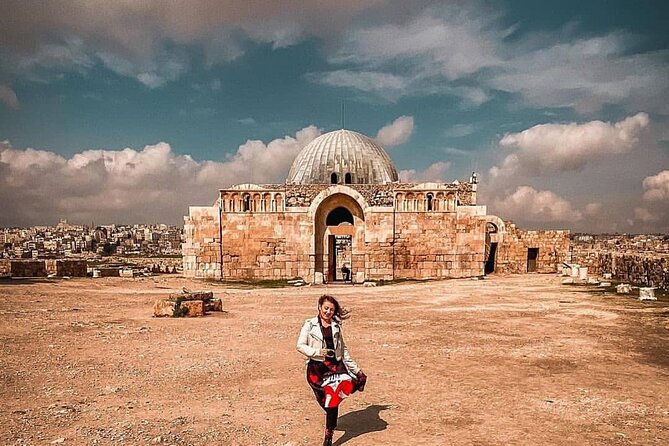
- The Citadel gives you Amman’s best historical starting point: See the hilltop ruins, archaeological museum, and Umayyad Palace area from Jabal al-Qala.
- Private transport keeps a long sightseeing day manageable: You move between the hills, downtown, and outlying museums in an air-conditioned vehicle.
- The $19.99 price is attractive for a private ride: Your group shares the vehicle, though admission tickets, tips, and guiding are not included.
- The day mixes major museums with local streets: The Roman Theatre, Al-Husseini Mosque, Rainbow Street, and Jordan Museum each show a different side of Amman.
- Driver quality matters here: Past bookings praised Kamal, Sami, and Hilal for helpful conversation and strong subject knowledge.
- The stated timing needs clarification: The tour is described as lasting about one to seven hours, while the listed visits add up to nearly six hours before driving time.
Why this tour works for a first look at Amman
Amman can feel scattered at first. Its old core sits among steep hills, while newer districts spread outward with shopping centers, wide roads, and grand public buildings. This experience handles that spread by using private transportation instead of asking you to piece the city together on foot or by taxi.
I like the overall mix. You get archaeology at the Citadel and Roman Theatre, national history at the Jordan Museum, military displays at the Royal Tank Museum, royal cars at the Royal Automobile Museum, religious architecture at King Abdullah Mosque, and a taste of downtown streets and Rainbow Street.
That range is useful, but it also means the day can feel like a sampler rather than a slow encounter with one neighborhood. If you want long café stops, extended market browsing, or hours at each museum, you may find the schedule tight. If you have only a short stay and want the major sights covered, the broad approach makes good sense.
The private format is the biggest practical advantage. Only your group takes part, so you can ask questions, adjust the pace, and spend more time at a favorite stop if the schedule allows. The vehicle is air-conditioned, a welcome feature when you are moving between Amman’s hills and busy roads.
A few more trips worth weighing up before you book
- From Amman: Petra and Wadi rum Full day Tour
★ 5.0 · 538 reviews - Petra Full-Day Private Tour from Amman
★ 4.9 · 392 reviews - Amman Petra Full-Day Trip
★ 5.0 · 270 reviews
Starting above the city at the Citadel
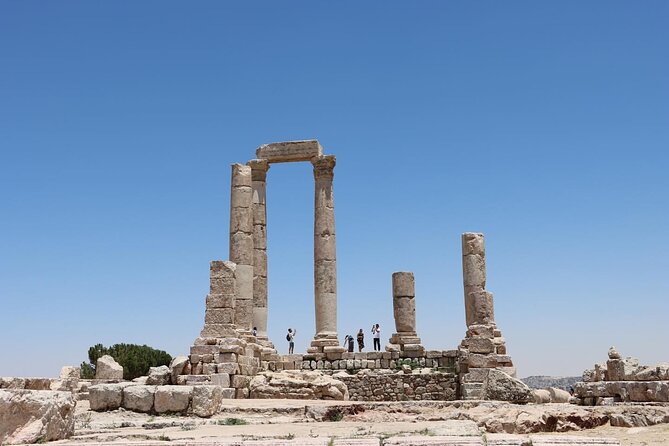
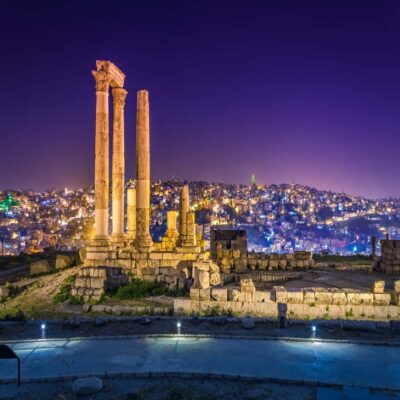
Jabal al-Qala, usually called the Citadel, is the natural place to begin understanding Amman. This hill was linked with the ancient Ammonians and later occupied by Greek, Roman, Byzantine, and Islamic rulers. You are not looking at one single monument here. You are seeing layers of settlement on a hill that has helped define the city for centuries.
Allow about an hour at the Citadel. The Umayyad Palace is one of the key remains, and the hill also includes ruins and an archaeological museum. The stop gives you a strong sense of how Amman grew from an ancient hilltop center into a modern capital spread across many hills.
I would pay close attention to the setting as well as the stones. From up here, the city unfolds in pale limestone tones, with the old center below and newer districts stretching beyond it. The view helps explain why driving between sights is useful. Amman is not a flat museum city where everything sits around one plaza.
Admission is not included, so budget separately for the ticket. Since the tour does not include a guide, ask your driver in advance how much historical explanation they can provide at the Citadel. Kamal, Sami, and Hilal were praised for sharing stories and answering questions, but that level of commentary should not be assumed as a formal guiding service.
Looking down from the Roman Theatre
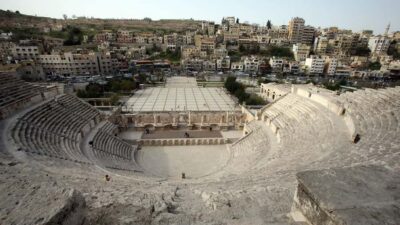
The Roman Theatre sits at the foot of Mount Jufa, opposite the Citadel area. Built in honor of Emperor Antoninus Pius after his visit to Amman in AD 130, it is one of the city’s clearest reminders of its Roman period.
The listed visit lasts about 30 minutes. That is enough for a look at the seating, structure, and relationship between the theatre and the surrounding hills, but it is not a long architectural study. If you enjoy Roman sites, you may want to use your time carefully and ask about the Greek inscription connected with the building.
The theatre is valuable partly because it feels tied to the city around it. Rather than sitting far from daily life, it occupies a central part of Amman, close to the old city. That makes it easier to connect ancient public life with the streets, shops, and religious buildings you see afterward.
Entrance is extra here too. Keep that in mind if you are comparing the low tour price with a self-guided day. The $19.99 covers the private vehicle and transportation, not a package of attraction tickets.
Old Amman around Al-Husseini Mosque
The old city center and Al-Husseini Mosque bring the tour down from the hill and into Amman’s working core. This part of the experience matters because the city is more than ruins and formal museums. Streets around the mosque offer a chance to see the older commercial center, with shops, movement, and the practical rhythm of downtown life.
The supplied timing does not give a separate duration for this stop, so you should ask how much time is planned here. That question matters. A quick drive-through will show you the area, but a longer pause lets you look around and get a better feel for the center.
The mosque itself is an important point of reference in old Amman. Dress and conduct should be respectful around religious sites. The tour details do not specify an interior visit here, so do not assume that entering the mosque is part of the plan.
This is also a good moment to tell your driver what you care about. If you want photographs, a short walk, or time to browse, say so early. The private format gives you more room to ask, though the number of scheduled stops means flexibility will depend on the day’s pace.
A completely different kind of day out around Amman:
- Amman: Petra, Wadi Rum, and Dead Sea 2-Day Tour
★ 4.9 · 1,173 reviews - 2-Day Tour: Petra, Wadi Rum, and Dead Sea from Amman
★ 5.0 · 1,141 reviews - From Amman: Petra & Wadi Rum Private or group Day Tour
★ 4.9 · 750 reviews - 2-Day Petra, Wadi Rum and Dead Sea Tour from Amman
★ 5.0 · 467 reviews
The Royal Tank Museum and Jordan’s military story
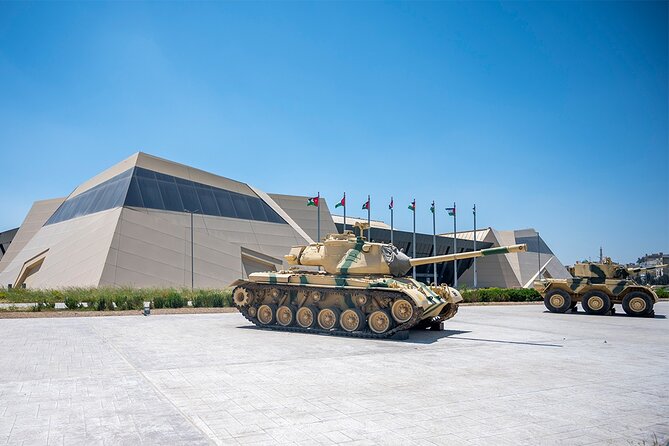
The Royal Tank Museum offers a sharp change of subject. Opened in 2018 beside King Abdullah II Park in Al Muqabalain, it occupies about 20,000 square meters and displays roughly 110 tanks and armored vehicles.
The collection includes American, British, Soviet, and German vehicles, along with vehicles from Jordan and other Arab countries. Displays are arranged in chronological order, beginning with the development of military vehicles in 1915. A separate hall covers local military industries, and the collection includes both original and restored examples.
Plan on about an hour. That gives you enough time to understand the museum’s broad story, though anyone with a serious interest in military equipment may want much longer. The scale also makes this stop less about a quick photo and more about seeing how warfare and engineering changed over time.
The museum was designed by Jordanian architect Zaid Dawood. That detail adds another layer to the visit, since the building itself is part of Jordan’s modern cultural presentation.
Admission is not covered. If the museum is a priority, confirm the entrance cost and opening arrangements before the day begins. The tour information does not provide those details, so I would not rely on the $19.99 as your full cost.
The Jordan Museum in Ras al-Ayn
The Jordan Museum is the broadest cultural stop on the route. Located in the new downtown area of Ras al-Ayn, it presents Jordan’s past, present, and future through galleries focused on archaeology, heritage, and national culture.
I would give this museum at least the scheduled hour. It is designed as a learning center, so it can help connect the separate pieces you see elsewhere in Amman. After the Citadel and Roman Theatre, you will have physical remains in mind. The museum gives those remains a wider setting within Jordanian history.
The hour is useful but limited. You may need to choose between reading every display and moving through the galleries at a steady pace. If museums are your main reason for booking, ask whether the schedule can be adjusted. A private tour should make that conversation possible, but the listed route contains many stops.
As with the other major sights, your entrance ticket is separate. The benefit here is not just seeing another museum. It is having a central place where the archaeology, culture, and heritage of Jordan are brought together in one visit.
Visiting the blue dome of King Abdullah Mosque
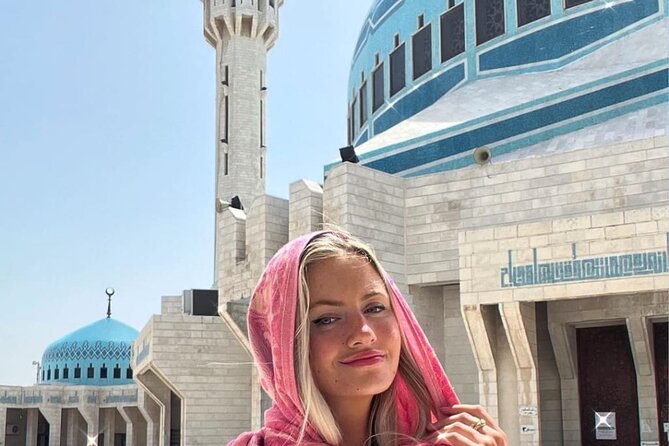
King Abdullah I Mosque is easy to recognize by its large blue dome. Built in the 1980s by the late King Hussein as a memorial to his grandfather, it is open to non-Muslim visitors.
The main prayer hall covers about 1,615 square meters and can hold 3,000 worshippers. Its octagonal design has no interior pillars, which gives the room an open appearance. The dome measures 35 meters across and rises 31 meters high.
Look up at the gold star in the center, surrounded by the Ninety-Nine Beautiful Names of Allah around the dome’s neck. The chandelier contains 168 lanterns arranged in three circles, with Quranic decoration and repeated references to Allah. The red carpet represents fertile land through its repeating textile pattern.
The planned visit is about an hour, though the tour information does not spell out the exact visit procedure. Since this is an active religious building, respectful clothing and behavior are essential. Ask your driver about current visitor arrangements before you enter, and do not assume every part of the mosque is open at all times.
This stop adds architectural variety to the day. After ancient stone ruins and military machines, the mosque offers a quieter look at modern Jordanian religious design.
Royal cars and national memory
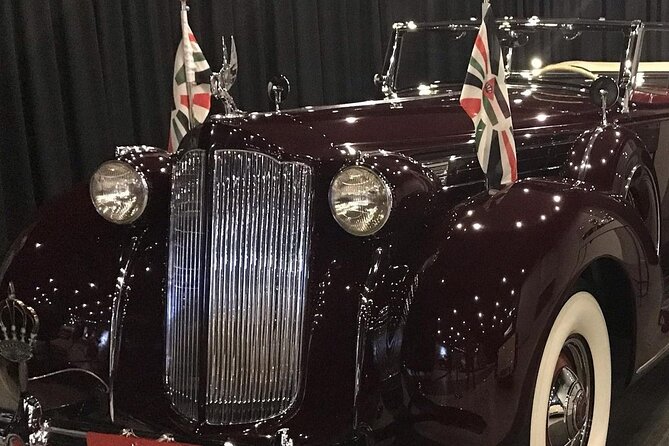
The Royal Automobile Museum is a natural favorite for anyone who enjoys cars, motorcycles, or modern Jordanian history. Its collection includes vehicles owned by King Abdullah I, King Talal, and King Hussein, tracing the royal family’s motoring story from 1916 to the present.
The museum does more than display old cars. The vehicles help show different periods in the country’s development, while the royal connection gives each one a personal and political setting. You may find this stop especially engaging if you like objects that connect public history with individual lives.
Electronic narration is available in Arabic, English, Spanish, French, and German. Children’s narration is also available in Arabic. That is a practical advantage for families and for anyone who prefers to explore at their own pace instead of relying on spoken explanations from the driver.
The planned time is one hour, and admission is extra. If cars are not your interest, this may be the easiest stop to shorten. If they are your interest, one hour may pass quickly, so speak up before the schedule is fixed.
A quick taste of Rainbow Street
Rainbow Street, officially Abu Bakr al-Siddiq Street, runs through historic Jabal Amman near downtown. The planned stop is only 15 minutes, with no admission charge.
That timing tells you what to expect: a brief look, not a full evening on the street. You might use it for photographs, a quick orientation, or a short pause among the shops and public spaces. If you want to eat, browse, or sit at a café, fifteen minutes will not be enough.
Rainbow Street works well as the final note because it shifts the mood from formal attractions to modern city life. Still, do not confuse a short stop with a full neighborhood visit. If this is the part of Amman you most want to experience, ask whether you can spend more time here by trimming a museum stop.
Is $19.99 a good value?
At $19.99 per person, this is an unusually low price for private transportation covering so many parts of Amman. The value improves when several people share the vehicle, and group discounts may be available.
The low price needs to be read correctly. It includes an air-conditioned vehicle and private transportation. It does not include a guide, attraction tickets, or a tip for the driver. Once you add entrance fees, the final cost will be higher.
Even so, private transport has real value in Amman. The route moves from the Citadel and Roman Theatre to museums in different parts of the city, then to the mosque and Rainbow Street. You avoid arranging separate rides and keep your group together.
The biggest uncertainty is duration. The experience is described as lasting approximately one to seven hours, while the scheduled visits total about five hours and 45 minutes before driving. Ask for a firm start and finish time, and ask whether all seven stops are intended for one day.
Who should book this Amman tour?
I would recommend it to first-time visitors who want a broad introduction to Amman, especially if you have limited time in Jordan. It also suits families and small groups that value a private vehicle, as well as anyone who wants to combine archaeology, museums, religion, and modern neighborhoods.
It is a good fit for history fans too, provided you confirm how much explanation your driver offers. Sami was praised for detailed historical discussion, while Kamal and Hilal were praised for stories, questions, and practical help. That makes the driver a major part of the experience.
I would hesitate if you want a licensed guide, long walks, or a slow food-and-market experience. Since no guide is included and several entrances cost extra, a fully guided cultural tour may suit you better. I would also avoid booking without clarification if the exact duration matters for airport timing or another fixed plan.
Booking about 24 days ahead is the typical pattern shown for this experience. Free cancellation is available if you cancel at least 24 hours before the start time. Changes or cancellations within 24 hours are not refunded, so keep that cutoff in mind.
Should you book it?
Book this tour if you want efficient private transport and a wide survey of Amman’s main sights at a low starting price. The route is ambitious, the drivers have earned strong praise for helpful conversation, and the mix of stops gives you more than a ruins-only tour.
Before paying, confirm the exact duration, entrance costs, pickup details, and whether your driver will provide historical commentary. If those points fit your needs, this is a practical way to get your bearings and see the city’s old and new sides in one day.
FAQ
How much does the Amman city tour cost?
The listed price is $19.99 per person. Group discounts may be available.
How long does the tour last?
The experience is described as lasting approximately one to seven hours. The scheduled stops total about five hours and 45 minutes before travel time, so confirm the exact schedule before booking.
Is hotel pickup available?
Pickup is offered.
Is this a private tour?
Yes. Only your group participates in the activity.
Is a guide included?
No. The tour includes private transportation and an air-conditioned vehicle, but no guide is included.
Are attraction admission tickets included?
No. Admission tickets for the Citadel, Roman Theatre, Royal Tank Museum, Jordan Museum, King Abdullah Mosque, and Royal Automobile Museum are not included. Rainbow Street is free.
Can non-Muslim visitors enter King Abdullah Mosque?
Yes. King Abdullah Mosque is open to non-Muslim visitors.
What is the cancellation policy?
You can cancel at least 24 hours before the experience start time for a full refund. Cancellations or changes made within 24 hours are not accepted or refunded.
Just added around Amman
- Amman Airport Private Round-Trip Transfer to Amman★ 5.0 · 3 reviews
- Petra Full-Day Private Tour from Amman or Airport★ 5.0 · 3 reviews
- From Amman :Full day Dead Sea and Ma’in Hot spring tour★ 5.0 · 3 reviews
- Dead Sea Full Day Tour including Lunch★ 5.0 · 3 reviews
- Jordan’s Gems: Tour from Amman to Karak Castle & Dead Sea★ 5.0 · 3 reviews
- 2-Night Private Jordan Gem Tour: Petra, Wadi Rum, and Aqaba from Amman★ 5.0 · 3 reviews
- Full-Days Tours Petra from Amman★ 5.0 · 3 reviews
- Queen Alia Airport Transfers From / To Amman, Petra, Dead Sea.★ 5.0 · 3 reviews
City Tours, compared.

Airport pickup or drop off transfer from or to Amman city
Read our review →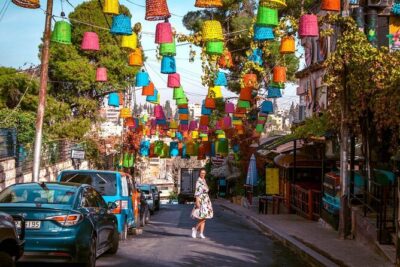
Private Full Trip of Madaba City Mosaics,Mount Nebo,Dead Sea & Amman Sightseeing
Read our review →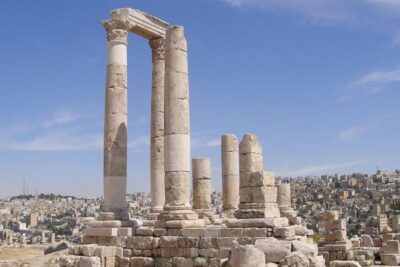
Browse the lists this tour appears in