
Reviewed · DEAD SEA TOURS
Jerusalem & Bethlehem Full-Day Tour from Amman or Dead Sea
Holy places, one very long day. This private trip links Jordan with Jerusalem and Bethlehem, giving you a practical way to see major Christian, Jewish, and Muslim sites without arranging several separate transfers. I especially like the private air-conditioned vehicle and the chance to travel with an English-speaking driver.
I also like the free Wi-Fi and mineral water in the vehicle, small comforts that matter on an 11 to 12-hour outing. The main drawback is the border crossing: you must leave the Jordanian vehicle, cross through Allenby Border Crossing, and may deal with several drivers during the day.
You should think of this as a private transport service with sightseeing, not a fully guided historical tour. The basic option does not include a local guide, and the border can add waiting time and cost.
In This Review
- Key points to know before you book
- What the $559.99 price really buys
- The border crossing is the day’s biggest variable
- Mount of Olives: Jerusalem’s best opening view
- Temple Mount: sacred ground with practical limits
- Via Dolorosa: a walk through the Old City
- Church of the Holy Sepulchre: the emotional center
- Tower of David and Mount Zion
- Old City of Jerusalem: allow time for the streets
- Bethlehem and the Church of the Nativity
- Transport, comfort, and the private format
- Who will get the most from this long day
- Booking advice and cancellation warning
- Should you book this Jerusalem and Bethlehem tour?
- FAQ
- Where does the tour begin?
- How long does the tour last?
- Is this a private tour?
- Is transportation included?
- Is a driver included?
- Is a local guide included?
- Is Wi-Fi available?
- Is bottled water included?
- Do I need to provide passport information?
- How does the border crossing work?
- What happens if the border crossing takes too long?
- Is the tour refundable?
Key points to know before you book
- Allenby Border Crossing shapes the day: You need to provide a passport photocopy after booking so a permit can be obtained, and you cross the border by shuttle bus on your own.
- Three drivers may be involved: One handles the Jordanian transfer, another takes you around Jerusalem, and another returns you toward the border.
- The basic price is $559.99 per person: That buys private transportation, an English-speaking driver, Wi-Fi, and water, but not a local guide or admission tickets.
- The sights cover several faiths: You visit the Mount of Olives, Temple Mount, Via Dolorosa, Church of the Holy Sepulchre, Mount Zion, Old City, and Bethlehem.
- The schedule is ambitious: The listed stops add up to several hours before accounting for driving, border formalities, meals, and delays.
- The tour suits a private group: Only your party participates, and group discounts are available.
What the $559.99 price really buys
At $559.99 per person, this is not a cheap sightseeing day. The value comes from convenience and privacy rather than a long list of included attractions.
You receive private transportation in a modern, air-conditioned vehicle, an English-speaking driver throughout the trip, free Wi-Fi, and mineral water. Pickup is offered, and the tour can begin from Amman or the Dead Sea area, with extra charges possible for pickup or drop-off elsewhere.
The basic option does not include a guide. That distinction matters in Jerusalem, where a street corner can carry centuries of religious and political meaning. Your driver can help with the route and general orientation, but you should not expect the same detailed interpretation you would receive from a licensed local guide.
Admission tickets are also not included at the listed stops. The Bethlehem portion is marked as free, but the other sites show admission as excluded. If you want museum entry or access to paid areas, budget separately.
For a couple or small private group that values its own vehicle and a direct Jordan to Jerusalem connection, the price may make sense. If you are happy in a larger group and mainly want transportation, a cheaper shared option may offer better value.
More Dead Sea floats and spa days:
- From Amman: Petra, Wadi Rum & Dead Sea 3-Day Tour
★ 4.9 · 31 reviews - Private Lunch or Dinner at a Local Traditional Restaurant from Dead Sea
★ 5.0 · 3 reviews
The border crossing is the day’s biggest variable
The route uses Allenby Border Crossing. After booking, you need to send a passport photocopy through WhatsApp so the operator can obtain permission for entry.
A particularly important practical detail is that this is not one continuous vehicle journey. One driver takes you to the Jordanian side, and you cross by shuttle bus on your own. In Jerusalem, a different driver handles the city touring, and another transfer is used for the return toward the border.
That handoff can feel less polished than a conventional guided tour, but it is normal for an international border transfer. Keep your passport and required documents easy to reach, follow the crossing instructions carefully, and do not plan anything tight after the tour.
The first 60 minutes of border waiting are free. After that, an extra $49 is charged for each additional hour or part of an hour. This is the key cost risk, since border processing can affect the day’s timing.
The operator asks for a WhatsApp number to make pickup easier. Make sure your phone can receive messages before departure, since that is also the stated contact method for pickup arrangements.
Mount of Olives: Jerusalem’s best opening view
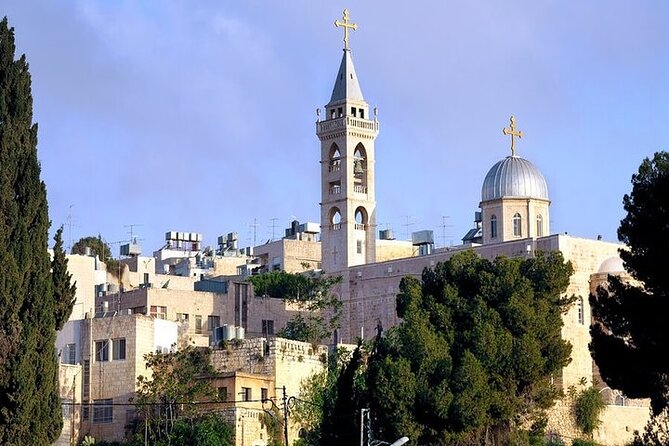
The Mount of Olives is a strong first stop because it gives you a broad view over Jerusalem before you enter the tight lanes of the Old City. The hill is covered with churches and is home to what is described as the oldest continually used cemetery in the world.
For Christian visitors, the mountain is linked with Jesus’ ascension after the crucifixion and resurrection. Jewish tradition also gives the hill a major role, with the belief that the raising of the dead will begin here on Judgement Day.
The Church of the Ascension dates from 1910 and offers the best views across Jerusalem according to the tour description. The Church of the Pater Noster is farther down the slope, beside the traditional place where Jesus taught his disciples.
The stop is listed as one hour, though the itinerary also suggests walking down the slope between sites. Wear shoes that can handle uneven streets and slopes. Admission is not included, so your driver may point out the churches without entering every building.
Temple Mount: sacred ground with practical limits
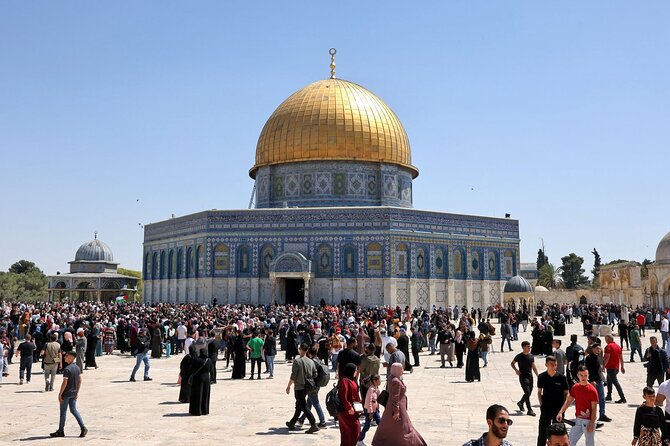
Temple Mount, also known as Haram Al-Sharif, is one of the world’s most important religious sites. The plaza is centered on the golden Dome of the Rock, Jerusalem’s most recognizable landmark.
The site matters to Jews and Muslims for different but closely connected reasons. It is associated with Abraham’s sacrifice, Solomon’s First Temple, and the Prophet Muhammad’s ascent to heaven. Beneath the dome is a sacred stone regarded as significant in both Jewish and Muslim tradition.
This is also a site where access and ownership are sensitive. The tour lists one hour here but does not include admission, and entry conditions can vary. Do not assume that seeing the plaza means entering the Dome of the Rock itself.
I would treat this stop as a view and orientation point unless your driver confirms that access is possible on the day. Modest clothing and respectful behavior are sensible at any religious compound, although the supplied tour information does not specify a dress code.
Via Dolorosa: a walk through the Old City
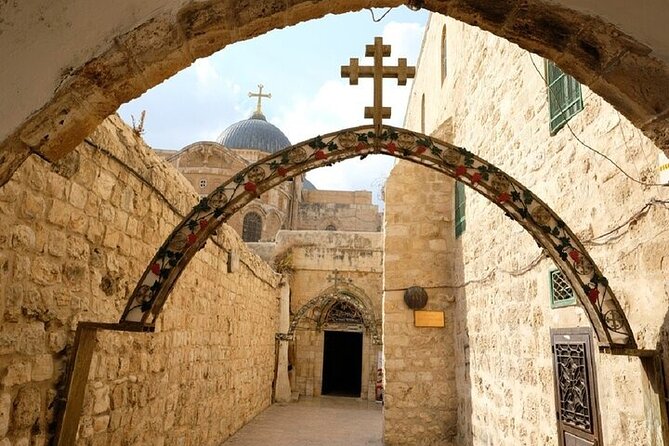
The Via Dolorosa is one of Jerusalem’s most meaningful walks for Christian visitors. It follows the traditional route of Jesus after his condemnation, as he carried the cross toward Calvary.
The route is marked by fourteen Stations of the Cross. Some are linked to Gospel accounts, while others come from long-held Christian tradition. The route begins east of the junction with Al-Wad Street, then moves west, south onto Al-Wad Street, and west again before reaching the Church of the Holy Sepulchre.
The tour allocates about one hour. That is enough for a quick walk and orientation, but not much time for quiet reflection, shopping, or careful study of every station. The lanes can be confusing, so an optional local guide would be useful here, especially if you want the religious context explained as you walk.
On Fridays, Italian Franciscan monks lead a procession along the route. The tour information does not promise that you will join it, but the timing could add a memorable religious dimension if your visit coincides with the procession.
Church of the Holy Sepulchre: the emotional center
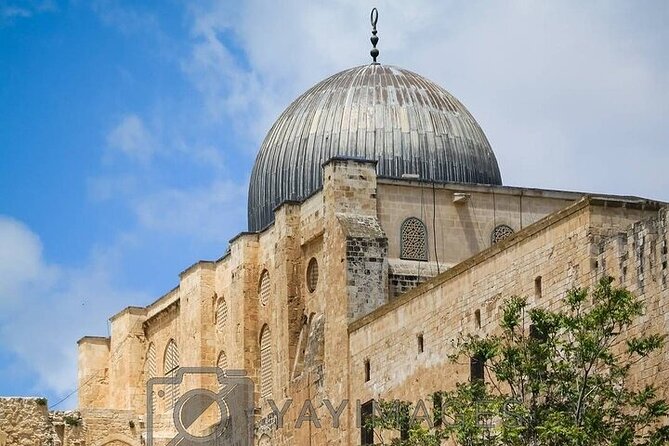
For many Christian visitors, the Church of the Holy Sepulchre is the most important stop of the day. It is traditionally identified as the place of Jesus’ crucifixion and contains the final five Stations of the Cross.
The site was selected by Saint Helena, the mother of Constantine the Great, during her visit to the Holy Land. The first church was built in 335 CE and destroyed in 1009. The building you see today dates mainly from the 11th century.
Inside, you can expect ornate religious architecture and a powerful sense of importance. The church is often crowded with pilgrims from around the world, so the one-hour allocation may pass quickly.
Admission is not included, though the church itself is not presented as requiring a standard ticket in the supplied information. Your driver can get you near the site, but the basic option does not promise detailed guidance inside. If this is the main reason you are visiting Jerusalem, consider paying for the optional local guide where available.
Tower of David and Mount Zion
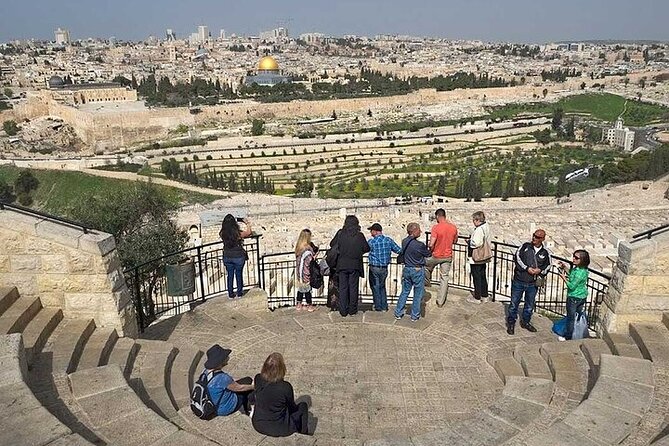
The Tower of David is a quick photo and orientation stop, listed at only five minutes. Despite its popular name, the citadel has no connection with King David. King Herod built the original fortifications around 24 BCE to protect his palace.
The first towers were named for Herod’s brother Phasael, his wife Mariamne, and his friend Hippicus. Romans later used the site as a garrison, and Crusader, Mameluke, and Ottoman rulers rebuilt it over time.
The present structure dates from the 14th century and rests on the foundations of the original Phasael Tower. The Tower of David Museum inside presents Jerusalem’s story through archaeological displays, but the tour does not include museum admission and allows little time for a proper visit.
Mount Zion receives a fuller one-hour stop. This small hill south of the Old City’s Zion Gate contains Jewish and Muslim shrines as well as Christian churches.
Traditions connect Mount Zion with the Last Supper and the final years of the Virgin Mary. Jewish tradition identifies it with King David’s Tomb. Nearby are the Last Supper Room, the Church of the Dormition, and the Church of St. Peter of Gallicantu, associated with Peter’s denial of Jesus.
This is one of the most useful stops for seeing how several faith traditions overlap in a small area. The drawback is that the tour packs a great deal into one hour, and admission is not included.
Old City of Jerusalem: allow time for the streets
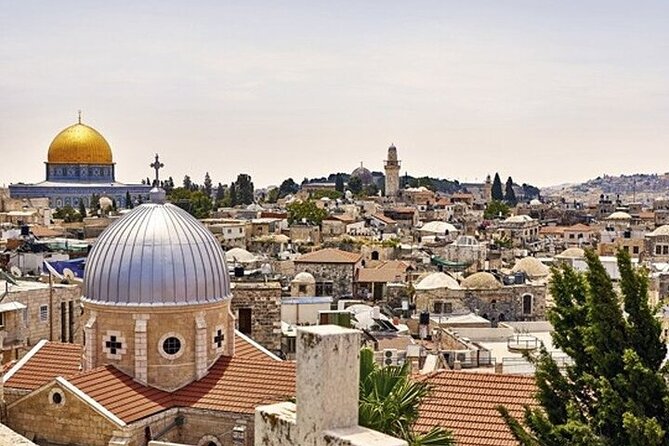
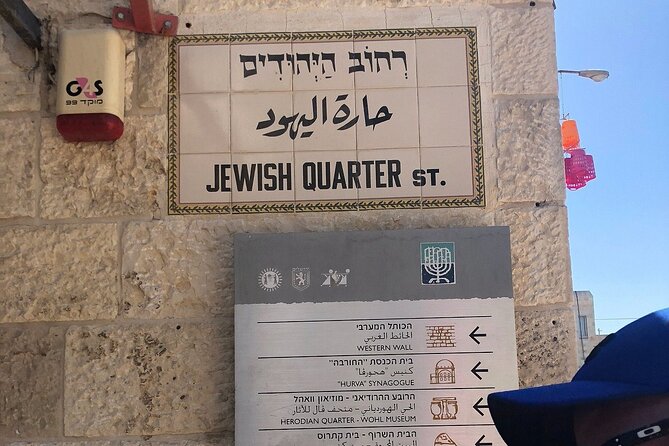
The Old City is enclosed by Ottoman fortifications and entered through famous gates. Zion Gate leads toward the Jewish Quarter, Jaffa Gate is a main route into the Christian Quarter, and Damascus Gate is among the best known.
The itinerary gives the Old City one hour, in addition to separate time for the Via Dolorosa and Church of the Holy Sepulchre. That is enough to walk through a section and get your bearings, but not enough to explore the whole walled city.
The ramparts offer a different view, with two walkable sections: Jaffa Gate north toward Lion’s Gate, or Jaffa Gate south toward Dung Gate. The tour does not say that rampart admission is included, so ask before counting on this walk.
I like the fact that the Old City is treated as more than a backdrop for one church. You see the gates, quarters, lanes, and walls that make Jerusalem feel layered and crowded with meaning. Still, the schedule is tight. If you want market time or a slow coffee, you will need to protect that time yourself.
Bethlehem and the Church of the Nativity
Bethlehem is about 10 kilometers south of Jerusalem in the West Bank. The city’s name means House of Bread in Hebrew, and its importance reaches beyond the Christian story.
The Old Testament identifies Bethlehem as the city of David and the place where he was crowned Israel’s first king. Rachel’s Tomb is at the northern entrance and is an important Jewish holy site.
The main purpose of the visit is the Church of the Nativity, built over the traditional birthplace of Jesus. The exact place is marked in an underground grotto, giving the visit a more focused feel than simply viewing the church exterior.
Two hours are allocated to Bethlehem, and the listed admission is free. That is helpful, but the time still includes movement through the city and the church, so do not expect a long independent exploration.
The Bethlehem stop also adds a political and logistical layer because it is in the West Bank. The supplied information does not give a detailed border or checkpoint procedure for this part of the route, so follow the driver’s instructions and allow the schedule to change if traffic or access causes delays.
Transport, comfort, and the private format
A modern air-conditioned vehicle is a real advantage on a day of this length. Free Wi-Fi and mineral water are modest inclusions, but they help during long transfers and border waiting.
Because only your group participates, you have more control than on a large coach excursion. You can ask for clarification, keep your belongings together, and avoid waiting for a busload of strangers at every stop.
The private format does not remove the need for patience. The day crosses an international border and uses several drivers, so the experience is better understood as a coordinated private transfer with sightseeing rather than a single guide-led excursion.
One rating of 4 out of 5 specifically praised the city-tour driver but wished the description had made the multiple-driver arrangement clearer. That is useful advice: book this with the expectation of separate transport stages, not one familiar driver from pickup to return.
Who will get the most from this long day
I would recommend this tour to a private group that has limited time in Jordan and wants to see the headline holy sites in Jerusalem and Bethlehem in one outing. It also suits people who prefer a private vehicle and do not want to arrange the Jordanian transfer, border paperwork, and city transport separately.
It is a good match for first-time visitors who mainly want an overview. The route touches the major religious sites, gives you a view from the Mount of Olives, and includes Bethlehem rather than stopping at Jerusalem alone.
I would hesitate if you want slow sightseeing, museum time, long meals, or detailed explanations at every site. The day already lasts 11 to 12 hours before unexpected border delays, and the basic option has no local guide.
You should also think carefully if your visit depends on entering every church or religious compound. Admission is not included, and access conditions can vary by site and day.
Booking advice and cancellation warning
The experience is non-refundable and cannot be changed for any reason. That makes it important to confirm your passport details, pickup location, WhatsApp number, and travel plans before paying.
Driver gratuities are highly recommended. Pickup or drop-off outside the standard service area may bring a supplement, and border waiting beyond the first free hour costs $49 for each extra hour or part of an hour.
Should you book this Jerusalem and Bethlehem tour?
Book it if you value private transport, need a direct Amman or Dead Sea connection, and accept a fast-paced day with border formalities. The combination of Jerusalem’s major sites and Bethlehem is hard to arrange casually in one day.
Skip it if you want a relaxed, deeply guided visit or if the non-refundable terms feel too risky. For the best experience, add an optional local guide where available, keep your expectations realistic, and treat the schedule as a broad introduction rather than a complete study of Jerusalem.
FAQ
Where does the tour begin?
Pickup is offered from Amman or the Dead Sea area. The listed location is Sweimah, Jordan.
How long does the tour last?
The full experience takes approximately 11 to 12 hours.
Is this a private tour?
Yes. Only your group participates in the private activity.
Is transportation included?
Yes. Private transportation in a modern, air-conditioned vehicle is included.
Is a driver included?
Yes. An English-speaking driver is provided over the trip.
Is a local guide included?
No. The basic option does not include a guide, though an optional local guide may be available at some sites.
Is Wi-Fi available?
Yes. Free Wi-Fi is provided on board the vehicle.
Is bottled water included?
Yes. Mineral water is included in the vehicle.
Do I need to provide passport information?
Yes. After booking, you must send a passport photocopy through WhatsApp so the operator can obtain a permit for Allenby Border Crossing.
How does the border crossing work?
One driver takes you to the border, and you cross by shuttle bus on your own. The city tour and return transfer may involve different drivers.
What happens if the border crossing takes too long?
The first 60 minutes of waiting at the border are free. After that, $49 is charged for each extra hour or part of an hour.
Is the tour refundable?
No. The experience is non-refundable and cannot be changed for any reason.
Just added around Dead Sea
- Private Lunch or Dinner at a Local Traditional Restaurant from Dead Sea★ 5.0 · 3 reviews
- From Amman: Petra, Wadi Rum & Dead Sea 3-Day Tour★ 4.9 · 31 reviews
Dead Sea Tours, compared.
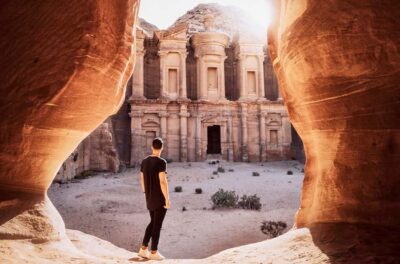
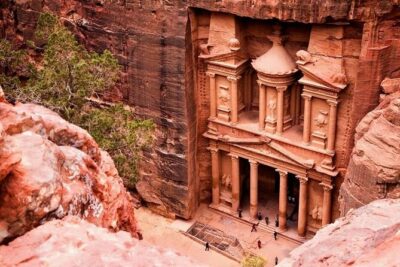
2-Day Tour: Petra, Wadi Rum, and Dead Sea from Amman
Read our review →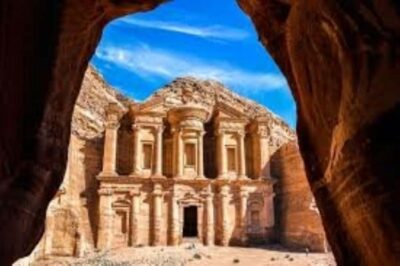
2-Day Petra, Wadi Rum and Dead Sea Tour from Amman
Read our review →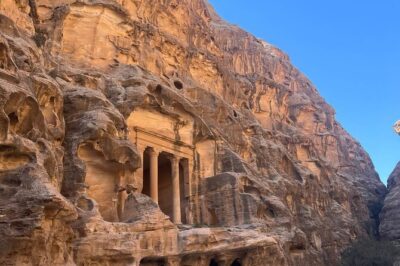
3-Day Private Tour from Amman: Petra, Wadi Rum, Dana, Aqaba, and Dead Sea
Read our review →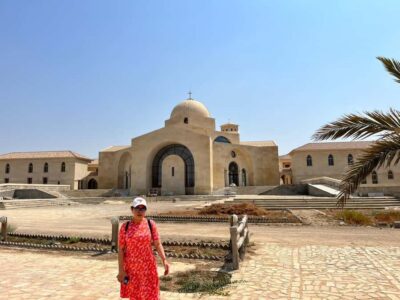
Dead Sea, Nebo, Madaba & Baptism Site Private or Group Tour
Read our review →
Browse the lists this tour appears in