
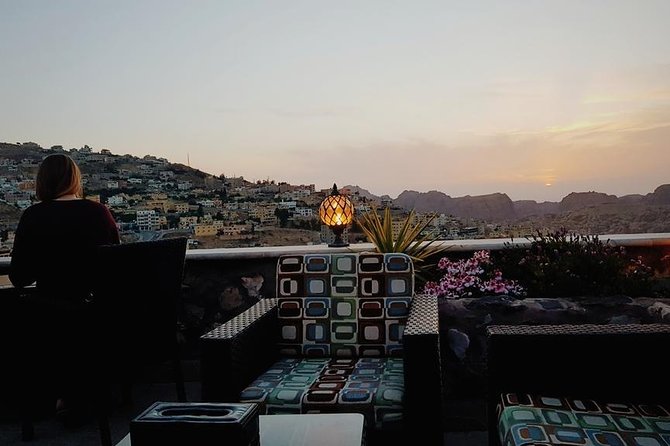
Reviewed · HIKING & TREKKING
Camping and Hiking Adventure : Discovering the south
Desert days reward steady feet. This eight-day Jordan trip links the country’s great southern sights in a satisfying order: four days of walking through Wadi Rum, a full day at Petra, a canyon hike in Dana Nature Reserve, and time beside the Red Sea. I especially like the Bedouin-led desert travel and the mix of hiking, 4×4 driving, ancient ruins, and seaside rest.
The private airport transfer, included meals, entry tickets, camping gear, and 24-hour assistance make the trip easy to manage. The main caution is the price, $1,771.61 per person, and the physical demand. Several days include three to four hours of walking, while the climb to Burdah Arch takes about three and a half hours round trip.
In This Review
- The trip at a glance
- Why this southern Jordan route works
- Day 1: From Aqaba Airport to Moon Valley
- Day 2: Jebel Hash and the Saudi-facing horizon
- Day 3: Gray and ocher jebels to the final bivouac
- Day 4: Siq Albarrah and the climb to Burdah Arch
- Day 5: Petra, the Rose City of the Nabataeans
- Day 6: Al Ghouir Canyon and Dana’s changing terrain
- Day 7: Aqaba and a calm Red Sea finish
- Transport, meals, and what the price really covers
- Who should book this adventure
- FAQ
- Where does the experience start?
- Where does the experience end?
- How long does the trip last?
- Is airport pickup included?
- Is a guide included?
- How much hiking is involved?
- Are meals included?
- Is the tour private?
- Should you book it?
The trip at a glance
- Four days in Wadi Rum: Walk across ocher dunes, gray and red sandstone country, canyons, and wide desert valleys.
- Jebel Hash summit walk: A three to four-hour trek leads to views toward both Jordan and Saudi Arabia.
- Burdah Arch climb: Reach one of Wadi Rum’s most striking natural formations after a guided ascent.
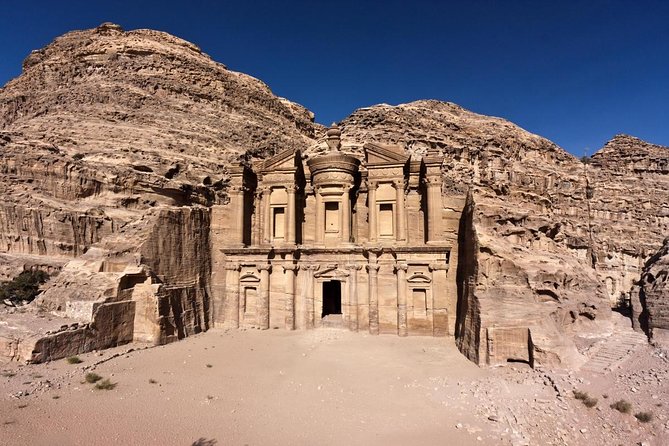
- Petra with a guide: Spend a full day in the Nabataean city, with the guided visit continuing to Qasr al-Bint.
- Dana to Wadi Araba: Descend from Al Mansoura through Al Ghouir Canyon and camp above the Araba Valley.
- Aqaba finish: Rest by the Red Sea, visit the beaches, or use a mask to see the coral reefs.
Why this southern Jordan route works
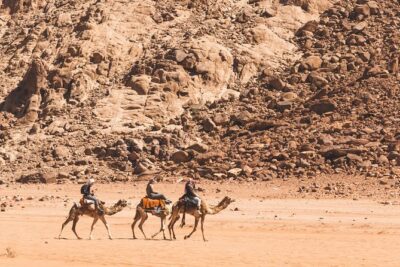
Many Jordan trips rush from one major sight to the next. This one gives Wadi Rum the time it deserves. A quick jeep ride can show you the desert, but four days on foot let you notice how the colors change from red to ocher to gray, how the sandstone walls frame the sky, and how quiet the country becomes away from the main roads.
I also like the route’s rhythm. The first half is active and remote. Petra adds archaeology and history without breaking the trip’s walking theme. Dana brings a different kind of scenery, with a long descent through a canyon and changing terrain. Aqaba then gives you a useful recovery day before flying home.
The price includes much more than guiding. You receive airport transfers, a visa entrance, private air-conditioned transportation, the Wadi Rum jeep tour, entry tickets, six breakfasts, six lunches, six dinners, tents, cooking equipment, and assistance at any hour. That package can represent fair value if you want one company to coordinate the entire southern route.
Still, this is not a budget camping trip. You are paying for a private arrangement, local guides, transport, meals, and a carefully connected route. If you mainly want a hotel holiday with a short desert outing, the cost and activity level may feel excessive. If you want an active trip with fewer planning decisions, the price is easier to justify.
More Aqaba days out:
- 3-Day Private Tour from Amman: Petra, Wadi Rum, Dana, Aqaba, and Dead Sea
★ 5.0 · 425 reviews - Wadi Rum Full Day Jeep Tour + Overnight & Dinner in Bedouin Camp
★ 5.0 · 368 reviews - Wadi Rum: Morning or Sunset Jeep Tour
★ 5.0 · 285 reviews
Day 1: From Aqaba Airport to Moon Valley
Your arrival point is King Hussein International Airport, about 76 kilometers from Wadi Rum. A representative meets you at the airport or a land border and helps with immigration before the private transfer south.
That assistance matters after a flight. You do not need to work out a taxi, find the desert entrance, or explain your route immediately after arrival. You are taken directly toward Wadi Rum in an air-conditioned car or van.
At Wadi Rum, you meet an English-speaking Bedouin guide. The first outing is by 4×4 jeep, a good introduction before the longer walks begin. The ride crosses the same broad desert area associated with Lawrence of Arabia and the Arab Revolt, adding a touch of modern history to the dramatic sandstone scenery.
The jeep tour also helps you understand the scale of Wadi Rum. From ground level, the mountains can seem close, but the open valleys stretch much farther than expected. This first day is less about covering distance on foot and more about getting into the desert mood.
Your first night is part of the camping program. Tents, cooking equipment, dinner, and breakfast are included across the desert portion, though the exact tent setup is not specified. Pack for simple outdoor living rather than hotel-style comfort.
Day 2: Jebel Hash and the Saudi-facing horizon
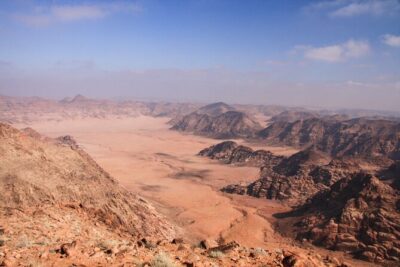
The serious walking begins with Jebel Hash. The climb takes about three to four hours and ends with views across both the Jordanian and Saudi Arabian deserts.
I like this day because the summit gives purpose to the walking. You are not simply crossing sand for the sake of mileage. You have a clear high point, a change in perspective, and a reason to look back at the route already covered.
After descending to the mountain’s base, lunch is served in the shade. That break is important. Desert heat can make a moderate walk feel much harder, so take your time, drink steadily, and use the midday pause to recover.
The afternoon route leads through Halg Umm Nughra and across the dunes of Wadi Sabet. The return to camp gives you a second kind of desert experience. The morning is focused on height and distant views; the afternoon is about open sand, valleys, and the changing forms of the jebels.
A three to four-hour trek is manageable for many people, but you should be comfortable walking on uneven ground for much of the day. The program says most people can participate, yet fitness still matters. There is no reason to prove anything here. A steady pace will serve you better than racing ahead.
Day 3: Gray and ocher jebels to the final bivouac
Day three continues through the gray and ocher mountains, leaving Wadi Sabet and heading north toward the Um Muqur and Um Sabatah massifs.
This is likely to be the quietest day of the trip. There is no headline monument or summit noted in the plan. Instead, you get a long look at the desert’s smaller details: the contrast between pale rock and orange sand, the changing shape of the mountains, and the enormous amount of open space between camps.
The final bivouac is set up among these massifs. That makes the evening especially worthwhile. You have one last night in the most remote part of the route, with dinner and the simple pleasure of sitting outside after a full walking day.
The practical drawback is that the program gives no exact walking distance or daily start time. Desert walking depends on heat, the guide’s pace, and conditions, so ask for those details before departure. You should also ask what bedding is supplied with the camping tent, since the published information confirms tents but does not spell out sleeping bags or mattresses.
More hikes and treks:
- Full Day Desert Tour, Jeep & Hiking
★ 5.0 · 98 reviews - Wadi Rum: Camel Trek Adventure
★ 5.0 · 19 reviews - Wadi Rum: Mountain Hike with Lunch & Scenic Valley Tour
★ 5.0 · 13 reviews - Half-Day Jeep and Hiking Bedouin Tour from Wadi Rum Village
★ 5.0 · 12 reviews
Day 4: Siq Albarrah and the climb to Burdah Arch
After breakfast, you take a three-hour guided walk through Siq Albarrah and its canyon. A siq is a narrow canyon or passage, and this section offers a change from wide dunes to close sandstone walls.
After lunch, a 4×4 transfer takes you toward Jebel Burdah. The main goal is the Burdah Arch, one of the desert’s large natural rock formations. Reaching it requires an ascent of about three and a half hours round trip.
This is the hardest-sounding walk in the Wadi Rum section, especially after several previous days on foot. The reward is the arch itself and the view from the climb. The route is not presented as a technical climb, but you should still expect uneven ground and a sustained uphill effort.
Tea and biscuits follow the descent, a small but welcome detail. This is exactly the sort of pause that makes an active itinerary feel humane. You return to the bivouac for dinner and another night outdoors.
The day packs a lot in: a canyon walk, lunch, a jeep transfer, the arch climb, and another camp night. If you prefer a slower pace, ask if the Burdah section can be adjusted. The company has a reputation for flexible planning, and past arrangements have included last-minute changes, but any alteration should be agreed before you count on it.
Day 5: Petra, the Rose City of the Nabataeans
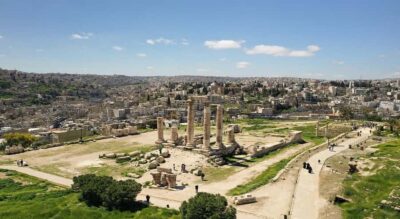
After breakfast, you transfer to Petra. The change is striking. Wadi Rum offers open space and natural rock formations; Petra places you among carved facades, valleys, stairways, and the remains of a major Nabataean center.
You have a full day at the site, lunch included. A guided visit continues to Qasr al-Bint, helping you get more than the famous first glimpse of the Treasury. The guide can give structure to a large archaeological area that is easy to underestimate.
Petra is not a quick photo stop. Even without knowing the exact walking route, a full day means you should expect substantial time on your feet. After four days in the desert, the change in footing and scenery may be welcome, but tired legs will still notice the stone paths and climbs.
The evening hotel stay is well timed. You move from tent camping to a proper bed, dinner, and a chance to prepare for the Dana hike. The program does not name the Petra hotel, so confirm its location and facilities if those details matter to you.
One useful point from the company’s broader service is its personal organization. Abdullah is described as highly responsive and willing to shape routes around individual wishes. That does not guarantee a particular guide on this departure, but it suggests you should communicate clearly about your walking pace, Petra priorities, and any needed changes.
Day 6: Al Ghouir Canyon and Dana’s changing terrain
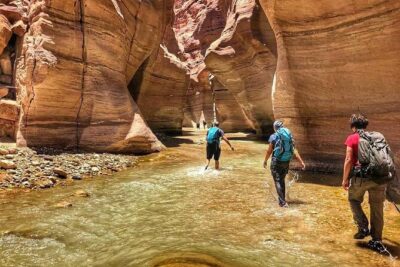
Day six starts with an English-speaking Bedouin guide at Al Mansoura, at an elevation of about 1,100 meters. From there, the route descends through Al Ghouir Canyon between tall pink sandstone cliffs.
This section adds variety to the trip. You are no longer walking only among dunes and isolated jebels. The canyon creates shade, close views, and a more enclosed sense of scale. The descent can also be harder on knees than an uphill walk, so trekking poles may be useful, though they are not listed as included.
The hike passes through Dana Nature Reserve, an area covering roughly 308 square kilometers. Its terrain drops more than 1,600 meters from the higher country toward Wadi Araba and includes wooded uplands, rocky slopes, plains, and sand dunes.
That range of terrain is one of the route’s strongest features. You see Jordan change over the course of a single day, from higher ground and canyon walls toward dry valley country. The reserve also supports a variety of wildlife and rare plant species, though the program does not promise specific sightings.
The night is spent camping on the heights above Wadi Araba, with a traditional Jordanian dinner. This is another outdoor night, but it differs from Wadi Rum because the setting follows a long descent through the reserve rather than a circuit of desert mountains.
Ask in advance how luggage is handled between camps and hotels. The published details confirm transportation and camping, but they do not explain what you carry during the hikes or how large bags move ahead. That answer can affect how lightly you need to pack.
Day 7: Aqaba and a calm Red Sea finish
After breakfast, you leave for Aqaba. The final full day is intentionally open, giving you time to enjoy the palm-lined city, sandy beaches, and Red Sea shore.
You can use the day to rest after the desert and Dana walks. The trip also points to the area’s coral reefs, which can be viewed with a simple diving mask. The wording does not promise a guided snorkel trip or rented equipment, so bring or arrange your own mask if that activity matters to you.
Aqaba is a sensible ending. The earlier days are tightly programmed, while this one lets you choose your own pace. You might spend the day by the water, explore the city, or simply enjoy a hotel night before the airport transfer.
The hotel is included for the night, though its name is not provided. The following morning, you transfer to King Hussein International Airport for departure.
Transport, meals, and what the price really covers
At $1,771.61 per person, this is a high-cost package, but the inclusions are substantial. You are not only buying four days of desert walking. You are also paying for private airport transfers, a visa entrance, an air-conditioned vehicle, the jeep tour, guides, park and site entry tickets, hotels, camps, and most meals.
Six breakfasts, six lunches, and six dinners are included. That covers the core trip, but personal expenses are not included. Set aside money for drinks, snacks beyond the provided meals, souvenirs, and optional activities in Aqaba.
Tips for the guide and driver are optional. You should still budget for them if the service is good and you want to thank the people who make the camping and transport work.
The strongest service points are communication and flexibility. Abdullah is repeatedly praised for staying reachable, arranging custom programs, and adapting plans. Drivers such as Naim, Tarek, and Adnan have also been singled out for care, good humor, cultural insight, and flexibility in wider Jordan journeys with the same agency. Because guide assignments can vary, treat these names as useful contacts to ask about, not a guaranteed cast for this exact departure.
Who should book this adventure
I would recommend this trip to you if you want Jordan as an active journey rather than a string of roadside stops. It suits people who enjoy several hours of walking, basic camping, local guiding, and days when the scenery matters as much as the destination.
It is also a good fit if you value one point of contact. The company handles airport reception, border assistance, vehicles, guides, food, camps, hotels, and entry tickets. That removes many small decisions from a route that can otherwise take a lot of planning.
I would be more cautious if you dislike sleeping outdoors, need exact daily distances, or want a relaxed hotel-based holiday. The schedule is full, the Burdah climb comes after several walking days, and the cancellation terms are strict: the experience is non-refundable and cannot be changed for any reason.
The private format is another advantage. Only your group participates, so you are not tied to a large coach group. Ask before booking about the exact group size, sleeping arrangements, guide assignments, luggage handling, and the planned walking pace. Those details will tell you more about comfort than the headline route.
FAQ
Where does the experience start?
It starts at King Hussein International Airport in Aqaba, Jordan, at 12:00 pm. Pickup can also be arranged from land borders.
Where does the experience end?
The tour ends with a transfer to King Hussein International Airport, Airport Street, Aqaba, Jordan.
How long does the trip last?
The experience lasts approximately eight days.
Is airport pickup included?
Yes. Two-way airport transfers between King Hussein International Airport and Wadi Rum are included.
Is a guide included?
Yes. An English-speaking Bedouin local guide is included during the desert hiking days. A guided Petra visit is also included through Qasr al-Bint.
How much hiking is involved?
The program includes several substantial walks. The Jebel Hash trek takes about three to four hours, the Siq Albarrah walk takes about three hours, and the Burdah Arch climb takes about three and a half hours round trip. The Dana and Al Ghouir Canyon day is also a dedicated hiking day.
Are meals included?
Yes. Six breakfasts, six lunches, and six dinners are included.
Is the tour private?
Yes. This is a private activity for your group only. Confirmation is provided within 48 hours of booking, subject to availability.
Should you book it?
Book this adventure if you want four serious days in Wadi Rum, a guided day at Petra, a canyon walk in Dana, and a gentle Red Sea finish, all handled by one local company. The combination is excellent, and the Bedouin guiding, private transport, camps, meals, and flexibility add real value.
Skip it if you want a cheap desert excursion or a soft-paced holiday. Before paying the non-refundable price, confirm the camping setup, luggage arrangements, guide names, and daily walking details. If those answers suit you, this is a strong way to experience southern Jordan with plenty of time outside the usual sightseeing loop.
Just added around Aqaba
- Wadi Rum 4-Hour Sunset Tour – Wadi Rum Desert Highlights★ 5.0 · 3 reviews
- 2-Night Private Jordan Gem Tour: Petra, Wadi Rum, and Aqaba from Amman★ 5.0 · 3 reviews
- 2 Days Private Tour to Wadi Rum and Petra from Eilat★ 5.0 · 3 reviews
- 1 Day & 1 Night | Stay & Jeep + Camel Tour in Wadi Rum | Magic Bedouin Star★ 4.5 · 3 reviews
- Petra Day Tour from Aqaba Port (Shore Excursion Petra) – JHT★ 5.0 · 3 reviews
- Aqaba Airport Transfer to Petra★ 5.0 · 3 reviews
- 4 Days tour Petra & Wadi Rum Tour from Aqaba Airport★ 5.0 · 3 reviews
- Private 2Day Jeep Tour with Overnight in Bedouin Camp in Wadi Rum★ 5.0 · 3 reviews
Hiking & Trekking, compared.
Dana to Petra Trek + Wadi Rum & the Dead Sea – 9 Days
Read our review →
Half-Day Jeep and Hiking Bedouin Tour from Wadi Rum Village
Read our review →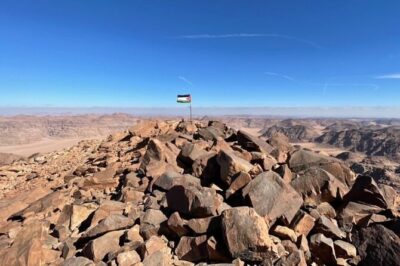
Wadi Rum Mountain Hike: Umm Ad Dami, highest point of Jordan + Jeep tour & Lunch
Read our review →Browse the lists this tour appears in