
Reviewed · DANA NATURE RESERVE TOURS
Dana to Petra Trek + Wadi Rum & the Dead Sea – 9 Days
Jordan rewards strong legs.
This nine-day journey links Dana Nature Reserve, Petra, Wadi Rum, and the Dead Sea in one well-planned trip. I like the quiet approach to Petra through the Back Door, and I like that meals, camps, luggage transfers, and guides are arranged for you. The main concern is simple: this is a demanding trek, not a sightseeing holiday with a few gentle walks.
The route covers roughly 48 kilometers over three serious hiking days, with long hours, steep climbs, rocky paths, and big descents. Still, the small group limit of 14, local trail support, and highly praised guides such as Motaz Zghoul and Mutaz Jarrar give the trip a reassuring sense of care.
In This Review
- Key points to know before booking
- Starting gently in downtown Amman
- Day two: Dana Reserve and the first wilderness camp
- Day three: Furon and the big mountain views
- Day four: remote paths around Ras Al-Feid
- Day five: walking into Little Petra
- Day six: Petra through the Back Door
- Day seven: trading mountain trails for Wadi Rum
- Day eight: floating at the Dead Sea
- What $1,595 per person really buys
- Fitness, equipment, and group style
- Should you book this Jordan trek?
- FAQ
- How long is the tour?
- Where does the tour start and finish?
- What time does the tour start?
- How large is the group?
- How much hiking is included?
- How fit do I need to be?
- Are meals included?
- Is accommodation included?
- Is the Jordan Pass included?
- Are airport transfers included?
- What happens if bad weather cancels the tour?
Key points to know before booking
- Three demanding days in Dana: Expect 15 to 17 kilometers per day, with up to 750 meters of ascent and 920 meters of descent.
- Petra by the Back Door: You approach the Monastery from a quiet Nabataean route rather than starting with the usual crowded entrance.
- Little Petra adds context: Siq al-Barid gives you a smaller, more intimate look at Nabataean buildings and water systems.
- Camping is part of the adventure: You spend three nights in wilderness camps, then sleep in a Bedouin camp in Wadi Rum.
- The group stays small: A maximum of 14 people makes it easier for the guide to keep everyone together and offer support.
- The price covers a lot: At $1,595 per person, the package includes eight nights, transport, meals, guides, and luggage transfers, but not the Jordan Pass, flights, insurance, or airport transfers.
Starting gently in downtown Amman
Day one is deliberately light. You arrive in Amman, check into your hotel, and have time to settle in. If your flight arrives early enough, you can explore Al Balad, the downtown center, and try some Jordanian food before the walking begins.
That first night matters. The next morning starts early, and this is your chance to adjust to Jordan, organize your hiking gear, and meet the people in your group. The experience begins and ends in Amman, so the city acts as a useful bookend to the trip.
You should pay attention to your arrival time when booking flights. The final day has no scheduled sightseeing, and the guidance is to leave Amman at least four hours before your flight. Airport transfers are not included, so you need to arrange those separately.
More Dana reserve trips:
- 3-Day Private Tour from Amman: Petra, Wadi Rum, Dana, Aqaba, and Dead Sea
★ 5.0 · 425 reviews - 3 Day Tour from Amman Petra Wadi Rum Dana Aqaba and Dead Sea
★ 5.0 · 4 reviews - 2-Day Petra, Little Petra and Dana Nature Reserve Tour From Amman
★ 4.5 · 3 reviews
Day two: Dana Reserve and the first wilderness camp
Pickup is scheduled for around 7:30 a.m. after breakfast. The drive from Amman to the trailhead takes about two and a half hours, giving you time to meet the group or rest before the first walk.
Dana Biosphere Reserve is a strong opening because its scenery changes quickly. The reserve contains four ecological zones, so you may notice shifts in plants, birds, and terrain as the route moves from mountain viewpoints toward the dry valleys below.
The first day covers about 15 kilometers. You walk for five to seven hours, gain about 260 meters, and descend roughly 690 meters. That descent is worth noting. Many people think downhill walking is easy, but steep, uneven descents can be hard on knees and feet.
The trail follows mountain slopes overlooking Dana Valley before dropping into Al Khashasha Valley. Your overnight stay is a wilderness campsite near Mansoura. This is not a hotel night with a late dinner and a long shower. It is a proper outdoor night, so bring a headlamp, warm layers, and a willingness to accept simple comforts.
A local hiking guide and donkey accompany the group on days two through four for safety support. Luggage is moved separately by pickup truck, which means you do not need to carry your full travel bag along the trail. You still need a daypack with water, sun protection, extra layers, and personal items.
Day three: Furon and the big mountain views
The second hiking day heads toward Furon. You begin with about an hour of climbing, then reach views of the Sharah Mountains and the wide Wadi Araba Desert.
The route covers approximately 16 kilometers, again taking five to seven hours. The ascent rises to about 563 meters, with around 170 meters of descent. Compared with day two, this day puts more emphasis on climbing, so a steady pace matters.
The campsite at Al Furon is part of the appeal. After several hours on foot, a cup of tea and an open view can feel like a proper reward. The trip places food and rest at the center of camp life, rather than treating them as quick pauses between activities.
Dinner is included, as are breakfast and lunch during the hiking portion. Based on the strong praise for the food and support team, meals are one of the practical strengths here. Still, dietary needs are not described in the available details, so you should raise them before departure rather than assume every request can be handled at camp.
Day four: remote paths around Ras Al-Feid
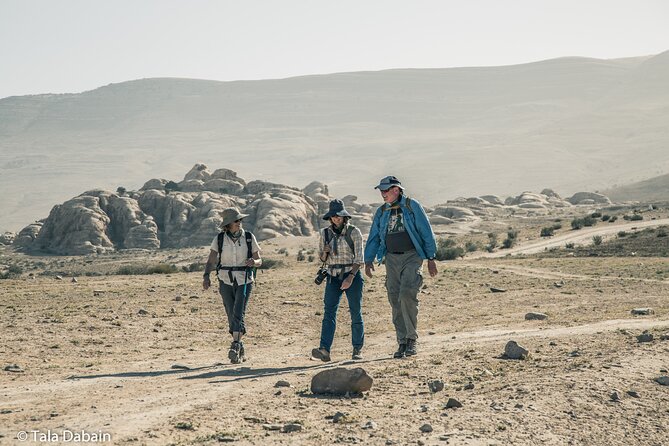
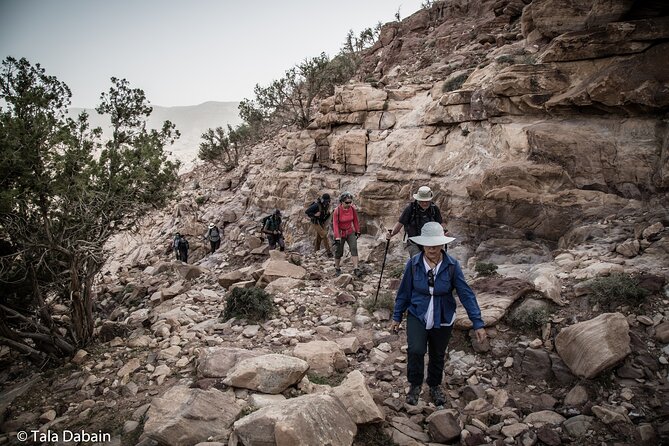
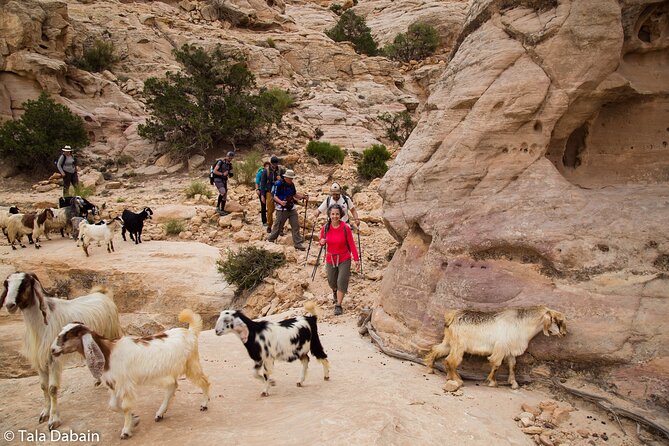
Day four is the most demanding day on paper. The route runs past Ras Al-Feid toward Ghbour Whedat, using smaller Bedouin shepherd paths that connect across the Sharah Mountains.
You cover about 17.1 kilometers. The figures are serious: 750 meters of ascent and 920 meters of descent. You can expect a full day outside, uneven footing, exposed mountain views, and sections where concentration matters more than speed.
The scenery shifts as you go. Black, rugged mountain peaks overlook the trail, while steep canyon drops open below. Later, the slopes soften and mushroom-shaped rock formations appear near camp.
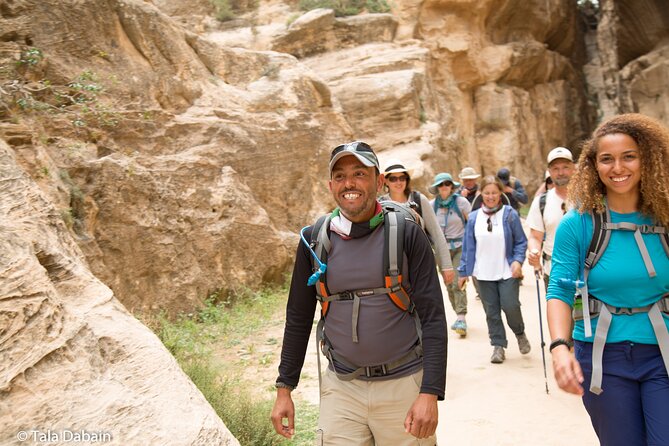
This is where the guide matters most. A good leader keeps a group together without making stronger walkers feel trapped or slower walkers feel rushed. The most praised guides on this route include Motaz Zghoul and Mutaz Jarrar, both described as caring, attentive, funny, and well organized. Guide assignments can vary, but the repeated emphasis on personal support is important for a trek of this kind.
You camp at Ghbour Whedat. It is remote, and that remoteness is the point. If you want a polished base with easy access to shops, this night may feel too basic. If you want quiet desert country and a real break from roads and buildings, it is one of the trip’s best features.
More Dead Sea floats and spa days:
- Amman: Petra, Wadi Rum, and Dead Sea 2-Day Tour
★ 4.9 · 1,173 reviews - 2-Day Tour: Petra, Wadi Rum, and Dead Sea from Amman
★ 5.0 · 1,141 reviews - 2-Day Petra, Wadi Rum and Dead Sea Tour from Amman
★ 5.0 · 467 reviews - Amman: Petra, Wadi Rum, and Dead Sea 2-Day Tour
★ 4.8 · 213 reviews
Day five: walking into Little Petra
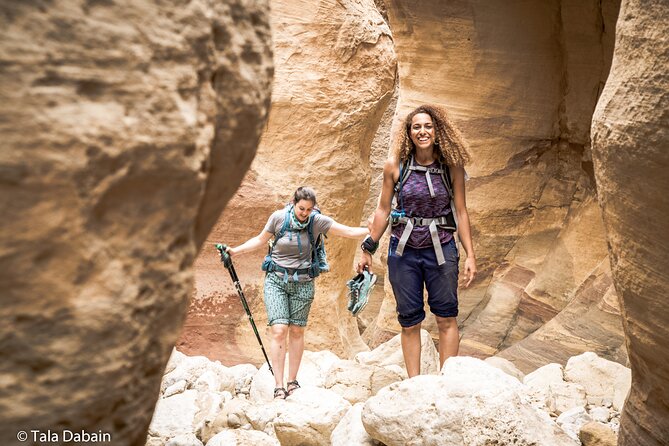
After three days in remote country, day five brings more signs of daily life. You pass Bedouin camps, sheep pens, and small agricultural plots on the approach to Al-Beidha.
This section helps put the scenery in human context. You are not only walking through empty mountains. You see how people live and work in a dry environment, along with older Nabataean remains such as wine and olive presses, aqueducts, and other water systems.
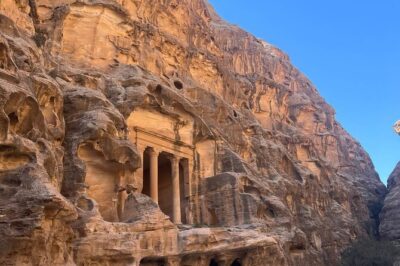
The route then climbs through a sandstone canyon before descending a narrow staircase into Little Petra. The site is also known as Siq al-Barid, or the Cold Canyon. It is generally understood as a suburb or satellite settlement connected with Petra.
Little Petra is smaller than the main archaeological site, but that is part of its appeal. You can study the carved sandstone spaces without the same scale and crowds associated with Petra itself. The approach also makes the next day more meaningful, because you have already seen the Nabataeans working with water, stone, trade, and mountain routes.
The supplied schedule does not list the exact hiking distance or elevation figures for this day, but it follows the strenuous wilderness section and still includes a canyon and steep stairs. Keep your walking shoes on and save some energy for Petra.
Day six: Petra through the Back Door
This is the trip’s signature day. Instead of entering Petra through the standard approach, you walk in by what is commonly called the Back Door.
The route begins along good tracks through Wadi Ghurab, with sandstone mountains guarding the approach. You follow an old Nabataean route out of the valley, then skirt a mountain on a natural rock terrace that has been improved in places for walking safety.
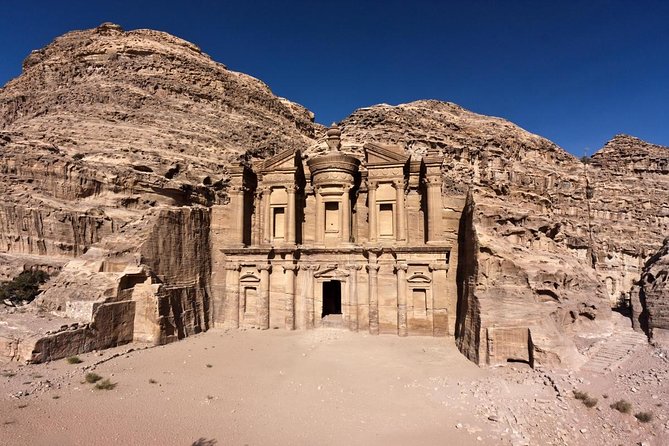
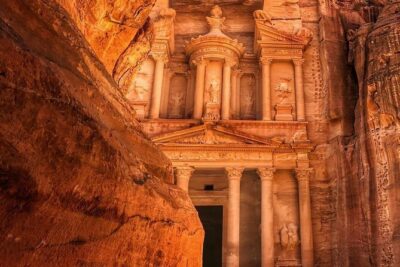
The trail narrows before reaching a high plateau above Wadi Siyyagh. Then the Monastery appears, carved into the cliff. The reveal works because you approach from above and from the side, rather than seeing Petra in the usual order.
A Bedouin café near the Monastery offers a place for refreshments if you want one. From there, Nabataean steps lead farther into Petra. The route eventually brings you into the famous archaeological city from an unusual direction.
There is a tradeoff. The Back Door avoids much of the normal foot traffic, but it does not make Petra effortless. You still deal with steps, uneven ground, heat, and a long day on your feet. After three days of trekking, some people may find the final approach tiring.
The schedule gives this day about 12 hours, though that does not mean you walk nonstop for 12 hours. It reflects a long excursion with time to explore. Bring water, sun protection, and enough energy to appreciate the monuments rather than simply push through them.
Day seven: trading mountain trails for Wadi Rum
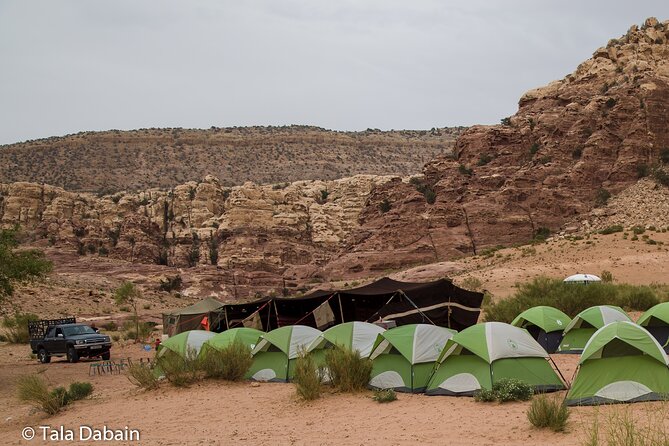
After breakfast, you leave Petra and head to Wadi Rum. The change is welcome. You move from mountain footpaths and carved city ruins into broad desert country known for sandstone formations, narrow gorges, and open horizons.
A Bedouin-led 4×4 safari explores the area. You visit valleys, rock inscriptions, sand dunes, and natural rock bridges. The day also leaves room to hike, scramble, and explore at your own pace.
This is not another long trekking day. The schedule lists about five hours, giving your legs a break while keeping you active. The sunset is a major part of the evening, followed by dinner and a night in a Bedouin camp.
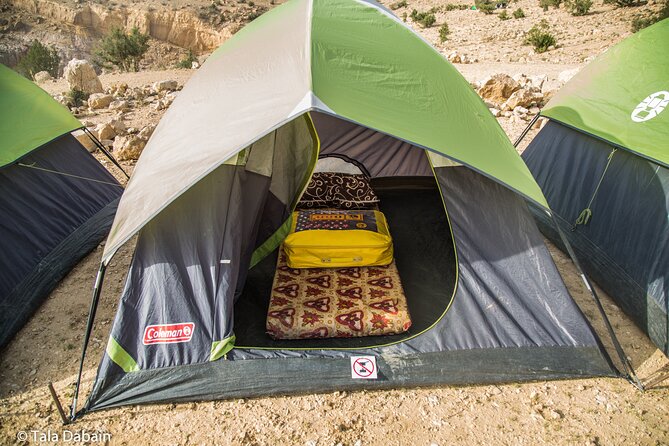
The camp adds a cultural side to the trip, especially through Bedouin hospitality and tea. Accommodation is still simple, and you should not expect the same facilities as a city hotel. But after the physical demands of Dana and Petra, sleeping under a starry desert sky feels like the right change of pace.
Day eight: floating at the Dead Sea
The final major outing is a visit to the Dead Sea, the lowest point on earth. After days of walking and camping, the timing is excellent.
You can float in the salty water, apply Dead Sea mud, relax by the pool, or choose spa treatments. These options give you control over the pace. You can make the stop restorative, social, or simply brief, depending on how tired you are.
The Dead Sea is not just a sightseeing stop tacked onto the end. It gives the trip a physical reset before you return to Amman. You should follow local guidance around entering the water and avoid getting the salty water in your eyes, especially if you have scratches from hiking.
In the late afternoon, the group returns to Amman by bus. You spend the final night at a hotel, which is useful after the wilderness camps and Bedouin stay.
What $1,595 per person really buys
The price is not cheap, but it includes the pieces that can become expensive and complicated on a self-planned trek. You receive eight nights of accommodation, an English-speaking licensed guide on days two through eight, transport, luggage transfers, seven lunches, six dinners, and eight breakfasts.
You also receive local hiking support, including a donkey for safety measures during the first three trek days. The small group cap of 14 helps explain the cost. You are paying for route logistics, drivers, campsite arrangements, luggage movement, local support, and the safety net of a leader who knows the trail.
The exclusions matter. The Jordan Pass, listed as the Jordan Wanderer option covering visa and entrance fees, is not included. Flights, airport pickup and drop-off, travel insurance, tips, personal expenses, hiking gear, and anything not specifically listed are also extra.
Value depends on how you like to travel. If you enjoy arranging every transfer, campsite, meal, and route detail yourself, you may find the package expensive. If you want a demanding route handled by a local operation, the price is easier to justify.
Fitness, equipment, and group style
You should have a strong level of physical fitness before booking. The three core days cover long distances, and the combined ascent and descent can be more tiring than the kilometer count suggests.
Wear broken-in hiking shoes with good grip. A daypack, refillable water container, sun protection, warm layers, rain protection, and a headlamp are sensible choices. The tour does not provide hiking gear, so you must bring your own equipment.
The social side is also important. A group of up to 14 is small enough to develop a shared rhythm, but large enough that you will not have the trail to yourself. The experience suits solo hikers who enjoy meeting people, couples who want a guided adventure, and active friends looking for a route with variety.
The atmosphere appears to depend heavily on the trip leader. Motaz Zghoul and Mutaz Jarrar receive especially warm praise for creating a friendly group, helping people at different speeds, and explaining the country along the way. That personal touch can make a hard trek feel manageable.
Should you book this Jordan trek?
Book it if you want Jordan through its trails rather than from a bus window. You get Dana’s changing terrain, remote camps, Little Petra, an unusual entry into Petra, a Wadi Rum jeep outing, and recovery time at the Dead Sea.
Think twice if you dislike camping, long walking days, steep descents, or early starts. This route asks for effort, and the 12-hour days around Petra and the wilderness sections leave little room for casual sightseeing.
For fit hikers who want strong scenery, local support, and a clear nine-day plan, this is a very good value. The best reason to choose it is the route itself: you reach Petra after earning the view, then finish with desert calm and a float in the Dead Sea.
FAQ
How long is the tour?
The experience lasts approximately nine days, including arrival and departure days in Amman.
Where does the tour start and finish?
It starts in Amman, Jordan, and ends back at the Amman meeting point.
What time does the tour start?
The listed start time is 7:00 a.m. Day two pickup is scheduled for about 7:30 a.m. after breakfast.
How large is the group?
The maximum group size is 14 people.
How much hiking is included?
The three main Dana to Petra hiking days cover about 15 kilometers, 16 kilometers, and 17.1 kilometers. Additional walking takes place around Little Petra and Petra.
How fit do I need to be?
You should have a strong physical fitness level. The trek includes long days, steep climbs, major descents, and uneven Bedouin trails.
Are meals included?
Yes. The package includes eight breakfasts, seven lunches, and six dinners.
Is accommodation included?
Yes. Eight nights of accommodation are included, including hotels in Amman, wilderness camping, and a Bedouin camp in Wadi Rum.
Is the Jordan Pass included?
No. The Jordan Pass, including the Jordan Wanderer option for visa and entrance fees, is not included.
Are airport transfers included?
No. Airport pickup and drop-off are not included.
What happens if bad weather cancels the tour?
If poor weather causes cancellation, you are offered a different date or a full refund. The tour may also be canceled if its minimum number of participants is not reached, with a different date, another experience, or a full refund offered.
More Hiking and Trekking
- From Amman: Wadi Mujib Siq Trail Private Hiking Tour
★ 4.9 · 36 reviews - Summer Hiking Tour in Jordan – 6 Days
★ 5.0 · 4 reviews - Full Day Desert Tour, Jeep & Hiking
★ 5.0 · 98 reviews - Wadi Rum: Camel Trek Adventure
★ 5.0 · 19 reviews
Just added around Amman
- Amman Airport Private Round-Trip Transfer to Amman★ 5.0 · 3 reviews
- Petra Full-Day Private Tour from Amman or Airport★ 5.0 · 3 reviews
- Full Day Amman Old and New Private City Tour★ 5.0 · 3 reviews
- From Amman :Full day Dead Sea and Ma’in Hot spring tour★ 5.0 · 3 reviews
- Dead Sea Full Day Tour including Lunch★ 5.0 · 3 reviews
- Jordan’s Gems: Tour from Amman to Karak Castle & Dead Sea★ 5.0 · 3 reviews
- 2-Night Private Jordan Gem Tour: Petra, Wadi Rum, and Aqaba from Amman★ 5.0 · 3 reviews
- Full-Days Tours Petra from Amman★ 5.0 · 3 reviews
Dana Nature Reserve Tours, compared.
3-Day Private Tour from Amman: Petra, Wadi Rum, Dana, Aqaba, and Dead Sea
Read our review →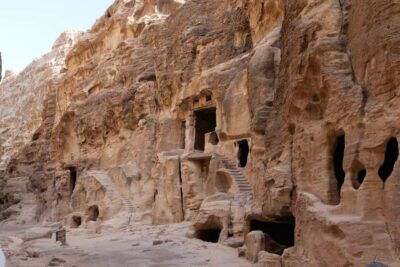
3 Day Tour from Amman Petra Wadi Rum Dana Aqaba and Dead Sea
Read our review →
2-Day Petra, Little Petra and Dana Nature Reserve Tour From Amman
Read our review →Browse the lists this tour appears in