Reviewed · AMMAN TOURS
Experience Jordan Group Tour – 8 Days
Jordan rewards curious wanderers. This eight-day route links Roman ruins, desert valleys, ancient castles, and Red Sea water in one well-organized trip. I like the small maximum of 14 people, which should make it easier to hear your guide and ask questions. I also like the local meal in Orjan, where the trip moves beyond famous sights and into everyday Jordanian life. The main drawback is the pace: Petra takes a full day, Wadi Rum takes another, and several long drives connect the stops.
You travel in a private, air-conditioned vehicle, with selected meals, admission tickets, a Wadi Rum Jeep safari, and an Aqaba boat trip included. At $1,295 per person, the price can be good value for a first visit, but flights, tips, insurance, personal spending, airport transfers, and the Jordan Pass are extra. The guide setup also changes with group size, so confirm what level of guiding applies to your booking.
In This Review
- Five things to know before you book
- Amman begins with old streets and ancient stones
- Jerash and Ajloun show Jordan’s northern side
- The Dead Sea brings a welcome afternoon pause
- Mount Nebo, Madaba, and two Crusader castles
- Petra deserves the full day it receives
- Wadi Rum combines camels, Jeeps, and Bedouin hospitality
- Aqaba finishes with coral and open water
- What the $1,295 price really covers
- The practical fit for different kinds of visitors
- Booking decision
- FAQ
- How long is the Experience Jordan Group Tour?
- What is the maximum group size?
- Is transportation included?
- Are meals included?
- Is a guide included for every day?
- Is the Jordan Pass included?
Five things to know before you book
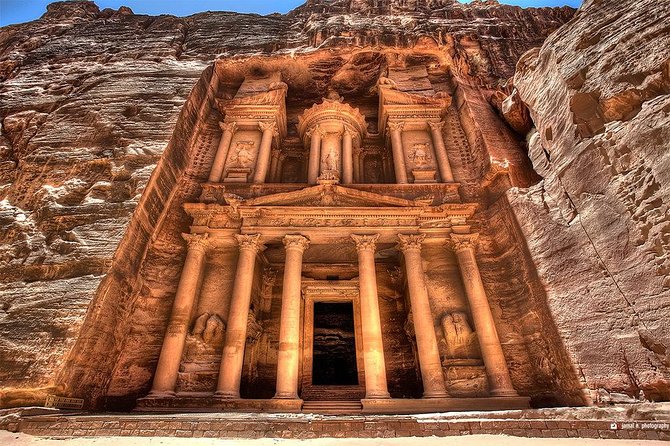
- Petra gets a full 12-hour day: You have time for the Siq, Treasury, tombs, theater, Monastery, or a viewpoint above the Treasury, but expect plenty of walking.
- Orjan adds real local contact: The olive groves and home-cooked family meal offer a welcome change from the usual sightseeing circuit.
- Wadi Rum includes more than a photo stop: A camel ride, Jeep safari, desert lunch, short walks, sunset, dinner, and Bedouin camp hospitality fill the day.
- The group is capped at 14: That is small enough for a more personal feel without the price of a fully private tour.
- Aqaba finishes the route on a lighter note: The glass-bottom boat includes lunch, swimming, snorkeling, and views toward Jordan, Israel, Egypt, and Saudi Arabia.
Amman begins with old streets and ancient stones
Your first day is based in Al Balad, downtown Amman. The schedule allows about eight hours, which gives you time to settle into the city rather than treating it as a quick overnight stop.
Amman has been inhabited since the Bronze Age, yet it is also a modern capital with busy streets and expanding neighborhoods. The old center gives you the best first look at Jordan’s daily rhythm. You can watch the city move around historic buildings, shops, mosques, and food stalls while getting your bearings.
The first day is not packed with a long list of ticketed sights. That is useful after an international flight. You have room to adjust to the heat, local traffic, and walking conditions before the more demanding days begin.
Day 3 returns to central Amman for a more focused visit. The Citadel and Roman Theatre bring several periods of the city’s past together. From the Citadel, you look across the dense hills of Amman, while the Roman Theatre gives you a sense of the scale of the old city.
The schedule also includes the blue Al-Husseini Mosque and a local restaurant serving falafel and hummus. That meal matters. Jordanian food is not merely fuel between ruins, and a simple falafel lunch can tell you as much about local habits as a formal museum visit.
A few more trips worth weighing up before you book
- Amman: Petra, Wadi Rum, and Dead Sea 2-Day Tour
★ 4.9 · 1,173 reviews - 2-Day Tour: Petra, Wadi Rum, and Dead Sea from Amman
★ 5.0 · 1,141 reviews - From Amman: Petra & Wadi Rum Private or group Day Tour
★ 4.9 · 750 reviews
Jerash and Ajloun show Jordan’s northern side
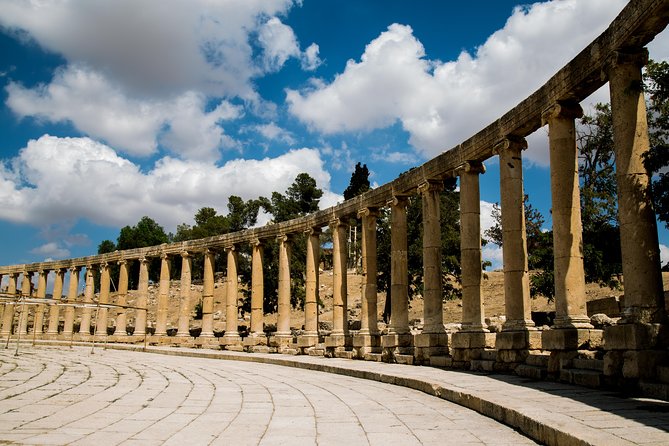
Day 2 heads north from Amman to Jerash, one of the best-preserved Greco-Roman cities in the Middle East. You have about four hours for the ruins, which is enough to see the main remains without racing through every column and paved street.
Jerash works best when you pay attention to proportion. The broad avenues, theaters, temples, and public spaces show how carefully the city was planned. Your guide can help turn scattered stone into a functioning ancient city, explaining what you are seeing instead of leaving you with a field of impressive but confusing ruins.
After Jerash, the route continues to Ajloun Castle. The castle once guarded an important crossroads linking Jerusalem, Cairo, Damascus, and Mecca. Its position above the surrounding area explains its military value better than any map can.
This is a useful pairing. Jerash focuses on civic life and Roman design, while Ajloun focuses on defense and regional power. You get two very different views of the north in one day.
The drive then reaches Orjan, where the itinerary becomes more personal. You meet a local host near olive groves with trees that have supplied olives for hundreds of years. A short walk leads to the family home, where a traditional meal is prepared and served.
I consider Orjan one of the strongest parts of this tour. You can ask about rural life, food, family customs, and the role of olive growing in the community. It is not a staged folklore show. It is a chance to sit down, eat, and listen.
The day is listed at roughly six hours for Ajloun and Orjan, plus the Jerash visit. Timing may feel tight if you want to linger at every site, so keep your expectations practical. This is a broad introduction, not a slow village stay.
The Dead Sea brings a welcome afternoon pause
After the second visit to Amman, you descend more than 1,000 meters toward the Dead Sea. At around 400 meters below sea level, this is the lowest point on Earth.
The unusual saltwater makes floating easy, and the included admission gives you time to enjoy the shore rather than simply stop for a photograph. You can also try the mineral-rich mud, which is used in beauty products and is associated with the Dead Sea’s traditional health appeal.
The Dead Sea is a good counterpoint to Jordan’s ruins. After two days of city streets, stone walls, and archaeological sites, you get an afternoon focused on rest. Bring a swimsuit, sandals, and something to protect your eyes from splashes. The saltwater can sting, so avoid shaving immediately before your visit and follow the site’s safety instructions.
The schedule shows about six hours for the Dead Sea portion, though the day also includes Amman sightseeing. It is worth asking how much actual time is planned at the water. A long visit is relaxing, but the route has plenty still to come.
Mount Nebo, Madaba, and two Crusader castles
Day 4 points south and packs several historic stops into one transfer day. Mount Nebo comes first, where the view is associated with Moses looking toward the Promised Land. The visit is short, about an hour, but its importance is religious and geographic as much as archaeological.
Next comes Madaba, a town known for Byzantine mosaics. The main prize is the Madaba Map, an old mosaic map of the Holy Land. You have about two hours in town, enough to appreciate the map and see why Madaba is an important stop for anyone interested in early Christian art.
Karak Castle changes the mood again. Its stone-vaulted rooms and passageways show the practical side of Crusader architecture. The castle dominates the town, and exploring it requires care because the interior can be uneven and dim.
Shobak Castle provides a shorter, contrasting stop. Also known as Montreal, it offers another look at Crusader fortifications, though the visit is listed at about an hour. Seeing both castles helps you compare their settings and design instead of treating either one as an isolated ruin.
This is one of the tour’s busiest days. Mount Nebo, Madaba, Karak, Shobak, and Wadi Musa all appear in one southbound push. You will cover a lot of ground, but you will also spend substantial time in the vehicle. Comfortable clothing and water matter more here than dressing for photographs.
The day finishes in Wadi Musa, the town beside Petra. Arriving the night before your Petra visit is a major advantage. You do not waste the morning driving from Amman, and you can start Petra with more energy.
A completely different kind of day out around Amman:
- From Amman: Petra and Wadi rum Full day Tour
★ 5.0 · 538 reviews - 2-Day Petra, Wadi Rum and Dead Sea Tour from Amman
★ 5.0 · 467 reviews - 3-Day Private Tour from Amman: Petra, Wadi Rum, Dana, Aqaba, and Dead Sea
★ 5.0 · 425 reviews - Petra Full-Day Private Tour from Amman
★ 4.9 · 392 reviews
Petra deserves the full day it receives
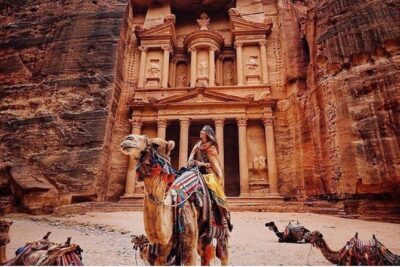
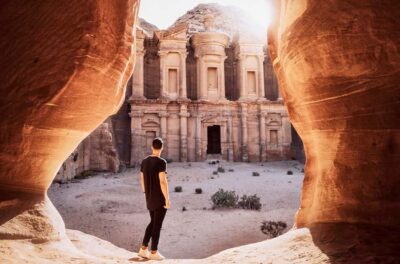
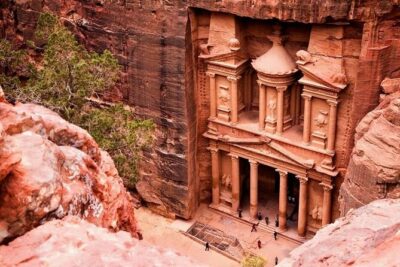
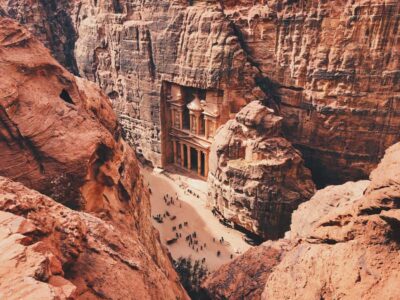
Day 5 is the centerpiece, with roughly 12 hours at Petra. The approach through the Siq is one of Jordan’s great travel moments. The narrow passage gradually reveals the Treasury, and the first view is powerful even if you have seen countless photographs.
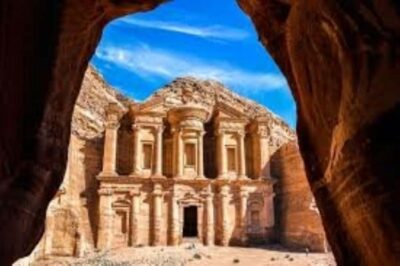
Petra was built by the Nabateans and later used by other civilizations. The famous Treasury is only the entrance to a much larger site. Continue into the ancient city to see the theater, tombs, caves, carved facades, and broad open spaces cut into rose-colored stone.
The long schedule is necessary. A short Petra visit can leave you with a famous photograph but little understanding of the place. Here, you have time to explore beyond the first overlook and choose how to spend the afternoon.
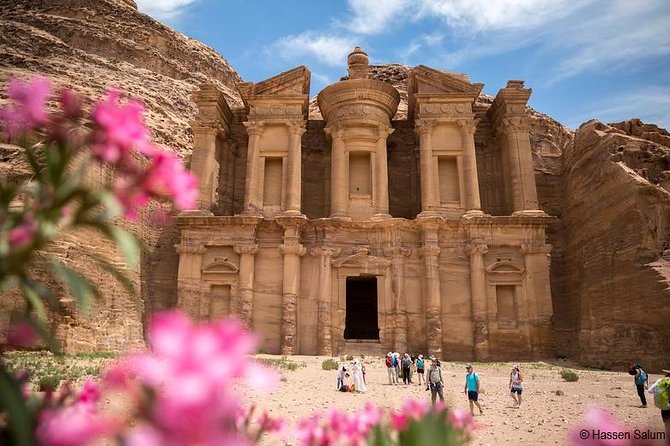
You may walk toward the Monastery, one of Petra’s great monuments, or seek the view over the Treasury from Jebel Khubtha. Both options require effort. The route includes uneven ground, stairs, and extended walking, so sturdy shoes and sun protection are sensible.
The itinerary also allows time away from the main path. That is valuable, because Petra rewards patience. The most memorable moments may come from a quieter tomb, a carved doorway, or a high view rather than the busiest angle at the Treasury.
Do not treat the 12-hour day as a requirement to walk every possible trail. You can pace yourself, take breaks, and tell your guide when you need a rest. Petra is much more enjoyable when you protect your energy for the afternoon.
Wadi Rum combines camels, Jeeps, and Bedouin hospitality
After Petra, the route reaches Wadi Rum for another full 12-hour day. The desert program begins with a camel ride, followed by a Jeep safari through valleys, canyons, dunes, narrow gorges, and mountain country.
This is not just a drive across open sand. Stops include rock inscriptions, mountain views, and places where you can walk, scramble, and explore at your own pace. The exact level of walking depends on the stop and your comfort, but you should expect sun, uneven ground, and exposure.
Lunch is cooked in the desert and served in the shade of the mountains. That simple meal, followed by a sunset view, gives the day a steady rhythm. You are not rushing from one ticket booth to another.
Dinner and the night at a Bedouin camp add a social side to the visit. The program includes Bedouin hospitality, breakfast the next morning, and a desert setting that feels very different from Petra or Amman.
Pack light for the camp portion and keep essentials close. A small bag with water, sun protection, a warm layer, and personal medication will be more useful than a large suitcase. The desert can feel hot in the day and cooler after sunset, so layers are practical.
Aqaba finishes with coral and open water
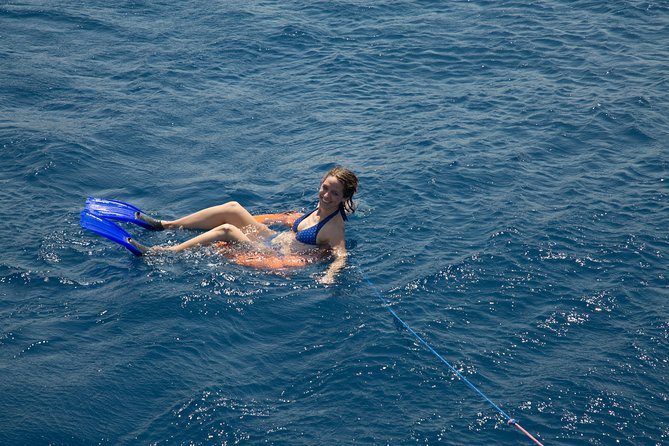
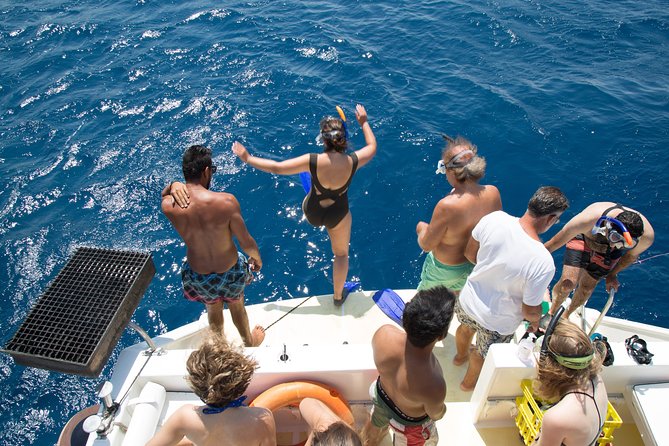
After breakfast in Wadi Rum, you head to Aqaba, Jordan’s port on the Red Sea. The boat trip uses a glass-bottom boat, allowing you to see coral without spending the whole outing in the water.
You also get time to swim and snorkel above tropical fish. Lunch is served on the boat, so the half-day outing combines sightseeing, water time, and a break from the road.
The views are unusually broad. From the water, you may see coastlines and territory associated with Jordan, Israel, Egypt, and Saudi Arabia. That makes Aqaba a fitting final stop after a week of moving through Jordan’s interior.
Sea conditions and weather can affect the experience. The tour requires good weather, and poor conditions may lead to a new date or a full refund. If swimming and snorkeling are important to you, ask how much time is planned in the water when you confirm the details.
After Aqaba, the plan depends on your departure flight. You may stay in Aqaba and use King Hussein International Airport, or return north to Amman for a final night before flying from Queen Alia International Airport. This choice affects the final transfer, so do not book a flight without checking the planned route.
What the $1,295 price really covers
The $1,295 price includes private air-conditioned transportation according to the route, admission tickets listed in the program, seven breakfasts, four lunches, dinner, the Wadi Rum Jeep safari with lunch, and the Aqaba boat trip with lunch and snorkeling.
That is a substantial package for eight days, especially because Petra, Jerash, Ajloun, Karak, Shobak, Mount Nebo, the Dead Sea, Wadi Rum, and Aqaba are all included. The private vehicle also saves you from arranging separate intercity transport.
The price does not include flights, insurance, tips, personal expenses, airport pickup or drop-off, or the Jordan Pass. The Jordan Pass is specifically listed as the Jordan Wanderer option, so calculate its cost separately before booking. Depending on your plans, admission costs and visa benefits may affect the final value.
Guide coverage depends on the size of your booking. With five or more people, a guide is provided for days 2 through 7. With two to four people, guiding is specified for Petra and Jerash. Transportation remains part of the tour, but smaller groups may receive less continuous commentary outside those sites.
Guide quality matters a great deal on a route like this. Names associated with this operator include Motaz Zghoul, Mutaz Jarrar, Mohamed, Islam Almaani, Ahlam, and Furat Mai. Past praise has focused on warm personalities, strong local knowledge, humor, good recommendations, careful leadership, and help with problems such as lost luggage. You can ask whether a named guide is assigned to your dates, but do not assume a particular person is guaranteed.
The practical fit for different kinds of visitors
This tour suits you if you have one week, want Jordan’s major sights, and prefer one organized route rather than arranging hotels, drivers, tickets, and desert activities yourself. The small group is a good middle ground between a large coach and a fully private trip.
It also suits people who want variety. You get archaeology, religious sites, local food, village life, castles, desert travel, snorkeling, and a beach-side finish.
The pace may not suit you if you prefer late mornings, long meals, or several free days. Petra and Wadi Rum are demanding, and Day 4 includes several stops with long road time. Most people can participate, but you should be comfortable with walking at Petra and moving around uneven castle and desert surfaces.
The tour has a 5 rating from 57 ratings and a 100 percent recommendation rate. The most praised features are the guides, the smooth organization, the quality of food, the scenery, and the feeling of being cared for throughout the trip. Those strengths matter here because Jordan is much easier to understand with a good guide beside you.
Booking decision
Book this tour if you want a broad, efficient first visit to Jordan and value included transport, meals, admissions, Petra, Wadi Rum, and Aqaba in one price. The Orjan meal and the small group add more human contact than a basic sightseeing transfer.
Think twice if you want a slow holiday, guaranteed private guiding, or complete control over each day. Before paying, confirm your guide arrangement, final airport, hotel details, Jordan Pass costs, and how much time you will have at the Dead Sea and Aqaba. Cancel at least six full days before the start for a full refund. Cancellations two to six days ahead receive 50 percent, while cancellations less than two days ahead are nonrefundable.
FAQ
How long is the Experience Jordan Group Tour?
The tour lasts approximately eight days, beginning in Amman and ending at either King Hussein International Airport or Amman, depending on your departure flight.
What is the maximum group size?
The tour accepts a maximum of 14 people.
Is transportation included?
Yes. Transportation listed in the program is provided in a private, air-conditioned vehicle.
Are meals included?
Seven breakfasts, four lunches, and dinner are included. Lunch is included during the Wadi Rum Jeep safari and the Aqaba boat trip.
Is a guide included for every day?
With five or more people, a guide is included for days 2 through 7. With two to four people, guiding is specified for Petra and Jerash.
Is the Jordan Pass included?
No. The Jordan Pass, listed as the Jordan Wanderer option, is not included. Flights, tips, travel insurance, personal expenses, and airport transfers are also excluded.
Just added around Amman
- Amman Airport Private Round-Trip Transfer to Amman★ 5.0 · 3 reviews
- Petra Full-Day Private Tour from Amman or Airport★ 5.0 · 3 reviews
- Full Day Amman Old and New Private City Tour★ 5.0 · 3 reviews
- From Amman :Full day Dead Sea and Ma’in Hot spring tour★ 5.0 · 3 reviews
- Dead Sea Full Day Tour including Lunch★ 5.0 · 3 reviews
- Jordan’s Gems: Tour from Amman to Karak Castle & Dead Sea★ 5.0 · 3 reviews
- 2-Night Private Jordan Gem Tour: Petra, Wadi Rum, and Aqaba from Amman★ 5.0 · 3 reviews
- Full-Days Tours Petra from Amman★ 5.0 · 3 reviews
Amman Tours, compared.
2-Day Tour: Petra, Wadi Rum, and Dead Sea from Amman
Read our review →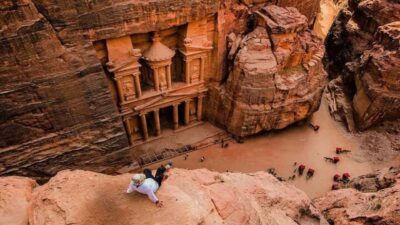
2-Day Petra, Wadi Rum and Dead Sea Tour from Amman
Read our review →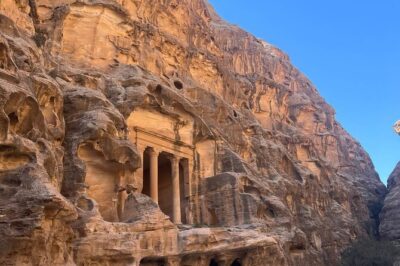
3-Day Private Tour from Amman: Petra, Wadi Rum, Dana, Aqaba, and Dead Sea
Read our review →