
Reviewed · DESERT CASTLES TOURS
Private Tour: Full-Day Islamic Desert Castles and Ajloun Castle Trip from Amman
Ruins reward the curious. This private day trip trades Jordan’s headline sights for four very different Islamic fortresses, from frescoed Umayyad baths to a Crusader-era stronghold. I like the private air-conditioned car and the freedom to linger, especially with drivers such as Mazen, Hasan, and Amer, who have been praised for clear explanations and thoughtful service. I also like the striking change of scenery, from the black basalt ruins of Azraq to Ajloun’s green hill country. The drawback is simple: 10 hours is a long day, with several hours spent in the car.
You leave Amman at about 9 a.m. with hotel pickup, an English-speaking driver, entrance fees, and onboard Wi-Fi included. Lunch is optional, and you should bring water, sun protection, a hat, and shoes that can handle uneven stone, dusty courtyards, stairs, and steep castle passages.
In This Review
- Four castles, four very different stories
- Why this day trip is worth your time
- The eastern road from Amman
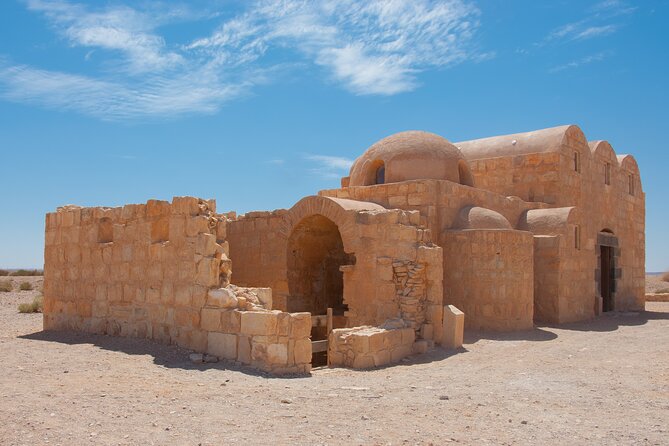
- Quseir Amra and its remarkable frescoes
- Qasr Al-Kharanah and the question of its purpose
- Qasr Al-Azraq and the Lawrence of Arabia story
- The long run to Ajloun Castle
- A private car, a flexible pace, and a long day
- What the $126.67 price really buys you
- Who will enjoy this Jordan day trip
- Should you book it?
- FAQ
- What is included in the tour price?
- How long does the tour last?
- Is this a private tour?
- Is lunch included?
- What should I bring?
- Can I use a Jordan Pass?
- Is the tour available in languages other than English?
Four castles, four very different stories
- Quseir Amra’s painted bathhouse: See rare eighth-century frescoes, including a zodiac on the domed ceiling.
- Qasr Al-Kharanah’s mysterious purpose: Walk through a square two-level building that may have served as a meeting place, fort, or caravanserai.
- Qasr Al-Azraq’s Lawrence connection: Explore a black basalt fortress once used by T.E. Lawrence during the Arab Revolt.
- Ajloun Castle’s hilltop defenses: Climb corridors, towers, and staircases built to resist Crusader armies.
- A genuinely private day: Your driver can adjust the pace and spend more time at the places that interest you most.
- Good practical value: The cost includes transport, hotel transfers, and entry fees, with a Jordan Pass option available.
Why this day trip is worth your time
Amman gives you Roman ruins, busy markets, and urban life. This tour shows you another Jordan, one shaped by wide eastern plains, old trade routes, hunting retreats, and frontier defenses. The sites are not all grand in the usual castle sense. Some are low, weathered buildings with broad courtyards. That is part of their appeal.
I like the way the day links two different periods. The desert castles belong mainly to the Umayyad era, when the first Muslim rulers of the Arab kingdom built rural retreats, hunting lodges, bathhouses, and way stations. Ajloun belongs to the later age of Saladin and the wars against Crusader forces.
The private format matters here. You are not tied to a large group moving from doorway to doorway. If you want extra time with the frescoes at Amra, a slower walk through Kharanah, or more photographs at Azraq, you can ask. The driver doubles as your guide, and the strongest service comes from that personal contact.
Mazen, Hasan, and Amer received especially warm praise for being punctual, respectful, patient, and willing to explain more than just the stones in front of you. Hasan also provided water and fruit and offered practical advice for later sightseeing. That sort of help can make a long Jordan day feel much easier.
Still, keep your expectations in check. These are atmospheric ruins, not perfectly restored palaces. Several desert sites are exposed to heat and sun, and the long run back to Amman after Ajloun can leave you tired. If you want a relaxed day with long meals and plenty of free time, this is not the right outing.
More desert castle loops:
- From Amman: Umayyad Desert Castles Tour with Transfer
★ 4.5 · 69 reviews - From Amman: Desert Castles of Eastern Jordan Tour
★ 4.8 · 53 reviews - From Amman: Full-Day tour Amman city tour and desert castles
★ 5.0 · 23 reviews
The eastern road from Amman
Pickup is offered from central Amman in a private air-conditioned vehicle. The drive takes you out toward the desert plains, where the city gradually gives way to open countryside and scattered settlements.
The first stretch is useful for context. Your driver can explain the Umayyad dynasty and why these isolated buildings appeared across eastern Jordan. They were not all conventional castles. Some were hunting lodges, country residences, bathhouses, meeting places, and stops along routes used by officials or caravans.
The published timing gives about an hour and a half for the opening portion of the day, though the exact sequence can change. The route may begin with Amra and Kharanah before Azraq, or Azraq may come first. Since the tour is private, tell your driver if one site matters most to you.
The open setting is part of the experience. You are not simply ticking off monuments in a city. You are seeing why these buildings were placed far from Amman, and how isolation, water, movement, and defense shaped their design.
Quseir Amra and its remarkable frescoes
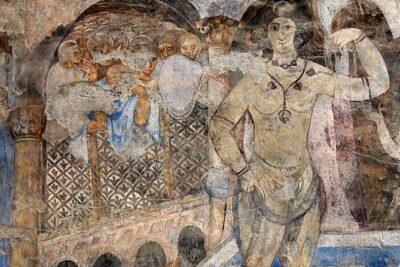
Quseir Amra is the artistic highlight. From the outside, it is a modest stone building. Inside, the faded paintings change everything.
The Umayyad rulers built this eighth-century hunting palace and bath complex. Its frescoes show courtly pleasure, music, hunting, wine, and nude figures. A painted zodiac curves across the bath chamber’s domed ceiling, an unusual survival from the early Islamic period.
You will spend about an hour and a half here, including time to inspect the vaulted rooms and painted surfaces. The frescoes are delicate and faded, so the experience depends on looking closely rather than expecting bright, freshly colored walls.
This is the stop where a good guide adds real value. Without explanation, you might see fragments of figures and decorative patterns. With context, the scenes reveal the tastes, politics, and private life of Umayyad rulers. Hasan was praised for guiding visitors at both Quseir Amra and Kharanah, which is useful because the buildings do not explain themselves in much detail.
The site has one practical weakness: the desert sun. You will be moving between open ground and enclosed rooms, so a hat and sunscreen are not optional extras. Comfortable shoes also help, though Amra is less physically demanding than Ajloun.
Qasr Al-Kharanah and the question of its purpose
Kharanah is the most immediately recognizable of the eastern buildings. Its square form, rounded corner towers, and plain exterior look like a picture-book fortress, but its original purpose remains uncertain.
It may have been a defensive building, a meeting place, or a caravanserai for officials and other people moving through the region. Archaeologists also see Roman foundations beneath the later structure. Inside, rooms line a central courtyard, with ornamental pilasters and niches adding detail to an otherwise restrained design.
Allow around an hour and a half. You can examine the courtyard, climb through the interior, and look at the building’s mix of influences. The design reflects early Islamic architecture while also showing connections with older Roman, Greek, and Mesopotamian traditions.
Kharanah is not a place that rewards a hurried exterior photograph alone. The interior layout is the point. Look at how the rooms face the courtyard and how the thick walls control movement and light.
A local guide may be present, and one account raised a practical concern about guides occupying central areas while visitors are trying to take photographs. The private format gives you more control, but patience helps. This is a working archaeological site, not a museum arranged for easy viewing.
More Jerash and Ajloun day trips:
- Full-Day Tour: Umm Qais, Jerash, and Ajloun from Amman
★ 5.0 · 162 reviews - Private Tour of Ajlun and Jerash
★ 5.0 · 130 reviews - Jerash, Ajloun, Umm Qais Day Trip
★ 5.0 · 99 reviews - Half Day Tour To Jerash From Amman.
★ 4.9 · 90 reviews
Qasr Al-Azraq and the Lawrence of Arabia story
Azraq feels different from Amra and Kharanah because it is built from dark basalt. The black stone gives the fortress a stern, almost brooding appearance, especially under the strong desert sun.
The castle began as an Umayyad hunting retreat in the Al-Azraq oasis. Its arches, towers, battlements, mosque, and courtyard show how a settlement with access to water could support a substantial defensive building in an otherwise dry region.
Azraq is also linked with T.E. Lawrence, the British soldier and Arab Revolt leader better known as Lawrence of Arabia. He used the fortress as a headquarters during 1917 and 1918. That association attracts many people, but the older Islamic structure deserves your attention too.
You will have time to walk through the courtyard and inspect the ruins at your own pace. The fortress is atmospheric rather than polished. Expect damaged walls, uneven surfaces, and open sections where the desert climate is very much part of the visit.
This stop works best if you enjoy connecting a famous twentieth-century figure with a much older site. If you come only for the Lawrence story, you may find the building less dramatic than expected. If you pay attention to the stonework and the oasis setting, it becomes more rewarding.
The eastern castles are sometimes described casually as a chain of castles, but that label can mislead you. Their functions varied. Calling Amra a castle, for example, hides the fact that its frescoed bathhouse was a place of leisure and display. That distinction is one of the most interesting lessons of the day.
The long run to Ajloun Castle
Ajloun changes the mood and the scenery. After the eastern sites, you travel north and west toward the hill country. The route is long, and the itinerary allows about four hours for this final section, including time at the castle and the return toward Amman.
Ajloun Castle was built in the twelfth century during the time of Saladin. Its purpose was military: to help defend against Crusader armies and control important routes through the hills.
This is the most conventionally fortress-like stop. You enter a semi-intact stronghold and walk through corridors, staircases, towers, and defensive spaces. Look for the murder holes, openings through which defenders could drop hot oil or pitch onto attackers below.
The castle also offers the day’s best high views, reaching across the green hills of the Jordan Valley. That contrast with eastern Jordan is striking. In the morning, you are among dark stone and dry plains. By Ajloun, the setting feels cooler, higher, and more wooded.
Ajloun requires more physical effort than the desert buildings. You may climb narrow stairs and walk on uneven stone. The tour notes advise anyone with mobility concerns to contact the operator in advance, and that is sensible. Even fit visitors should take their time.
Because the castle comes late, fatigue can affect your visit. You may be tempted to rush through it so you can get back to Amman. Resist that if you can. Ajloun is not a quick photo stop. Its passages, defenses, and views are what make the long transfer worthwhile.
A private car, a flexible pace, and a long day
The vehicle is air-conditioned and selected according to the size of your group. Hotel pickup and drop-off remove the need to arrange separate taxis or figure out public transport to distant sites.
Onboard Wi-Fi is included, which is useful during a full day on the road. Water and fruit were provided by one driver, but do not assume that every extra is guaranteed. Beverages and meals are not included unless you choose a lunch option.
The private arrangement is the strongest practical feature. You can ask to stop for a short break, spend longer at a favorite castle, or adjust the order when needed. The itinerary is still ambitious, but you are not sharing the vehicle with strangers or waiting for a large group.
The day starts at 9 a.m. and lasts about 10 hours. In practice, road conditions, time at each site, and the order of stops can affect the finish. The return to Amman after Ajloun is especially important to understand. This is a full outing, not a half-day excursion with an early afternoon return.
All tours are conducted in English unless another language is requested. The driver acts as your guide, while an additional guide at the desert castles is available with the relevant option. The best experience will depend partly on how much explanation you want, so clarify the guide arrangement when booking.
What the $126.67 price really buys you
At $126.67 per person, the price is easiest to judge by group size. For one person, it is a serious spend. For two or more people, a private vehicle, hotel transfers, entrance fees, an English-speaking driver, and Wi-Fi make the cost more defensible.
You are paying for time and convenience as much as for admission. Reaching Azraq, Amra, and Kharanah independently would require arranging transport across a large area, then organizing the return to Amman and the transfer to Ajloun. A private driver removes much of that work.
Entrance fees to Azraq, Amra, Kharanah, and Ajloun are included when you select the standard option. If you hold a Jordan Pass, tell the operator so the entry charges can be reimbursed at the destination. Arab and Gulf Cooperation Council nationals should pay close attention to the booking choice because reduced entry fees may apply.
Lunch is not automatically included. You can select an option with lunch, and vegetarian food can be requested. Beverages and tips are extra, with a tip for the driver recommended.
For a couple, family, or small group that values privacy and a tailored pace, I think the price offers fair value. If you are watching every dollar and do not mind sharing transport, a group tour could cost less, though this experience is specifically built around private service.
Who will enjoy this Jordan day trip
I would choose this tour if you have already seen Amman’s main sights and want a broader view of Jordan’s past. It is also a smart choice if Petra, Wadi Rum, or Jerash fills most of your schedule and you want one day devoted to less familiar monuments.
History fans will get the most from it, especially people interested in early Islamic architecture, the Umayyads, military design, or the Arab Revolt. Photographers should like the contrast between painted interiors, black basalt, geometric courtyards, and Ajloun’s hill views.
Solo visitors can also benefit from the private format. Mazen was specifically praised for his respectful manner and support of a female solo visitor, while Amer was praised for professionalism and helpful historical explanations.
I would hesitate if you dislike long drives, have trouble with stairs, or expect every stop to resemble a grand European castle. The eastern buildings are smaller and more ruined than the name might suggest. Their appeal comes from setting, age, construction, and the stories attached to them.
Bring a hat, sunscreen, comfortable walking shoes, and a sense of proportion. You are seeing fragile archaeological remains, not entering fully restored palaces with polished floors and elaborate displays.
Should you book it?
Book this private trip if you want a full, varied day beyond Amman and value a driver who can explain the country as you go. The combination of Amra’s frescoes, Kharanah’s unanswered questions, Azraq’s basalt walls and Lawrence connection, and Ajloun’s mountain defenses gives you a useful cross-section of Jordanian history.
I would book it especially for a couple or small group, and I would contact the operator before departure to confirm pickup, guide arrangements, lunch, and the Jordan Pass option. Skip it if you need a slow schedule or prefer famous headline attractions over remote ruins.
The best reason to go is not one spectacular monument. It is the change from desert plain to hilltop fortress, and the chance to see how different rulers used Jordan’s difficult terrain for pleasure, travel, and war.
FAQ
What is included in the tour price?
Hotel pickup and drop-off, private transport in an air-conditioned vehicle, an English-speaking driver, onboard Wi-Fi, and entrance fees to Al-Azraq, Quseir Amra, Qasr Al-Kharanah, and Ajloun Castle are included when the applicable option is selected.
How long does the tour last?
The experience lasts approximately 10 hours. The advertised start time is 9 a.m.
Is this a private tour?
Yes. Only your group participates, and the itinerary can be adjusted to suit your interests.
Is lunch included?
Lunch is not included in the standard arrangement. A lunch option is available, and vegetarian food can be requested.
What should I bring?
Bring a hat, sunscreen, and comfortable walking shoes. The sites include exposed desert areas, uneven ground, corridors, and stairs.
Can I use a Jordan Pass?
Yes, a Jordan Pass option is available. If you already have a Jordan Pass and paid for a tour option that included entrance fees, inform the operator so the fees can be reimbursed at the destination.
Is the tour available in languages other than English?
The tour is provided in English. Other languages can be requested.
Just added around Amman
- Amman Airport Private Round-Trip Transfer to Amman★ 5.0 · 3 reviews
- Petra Full-Day Private Tour from Amman or Airport★ 5.0 · 3 reviews
- Full Day Amman Old and New Private City Tour★ 5.0 · 3 reviews
- From Amman :Full day Dead Sea and Ma’in Hot spring tour★ 5.0 · 3 reviews
- Dead Sea Full Day Tour including Lunch★ 5.0 · 3 reviews
- Jordan’s Gems: Tour from Amman to Karak Castle & Dead Sea★ 5.0 · 3 reviews
- 2-Night Private Jordan Gem Tour: Petra, Wadi Rum, and Aqaba from Amman★ 5.0 · 3 reviews
- Full-Days Tours Petra from Amman★ 5.0 · 3 reviews
Desert Castles Tours, compared.
Full-Day tour Amman city tour and desert castles
Read our review →
Private Tour of Desert Castles Eastern Jordan with optional Azraq Wetland Visit
Read our review →
Day Tour To Desert Castles & Cave of the Seven Sleepers
Read our review →
5-Desert Castles of Jordan Full-Day Private Tour from Amman
Read our review →
Browse the lists this tour appears in