
Reviewed · UMM QAIS TOURS
Private Tour: Full Day Trip of Jerash, Umm Qais, and Pella from Amman
Three ancient cities, one very full day. This private trip from Amman gives you Jerash’s remarkable Roman ruins and the sweeping views from Umm Qais, while private transport keeps the day flexible. I especially like the included hotel pickup and the chance to explore three very different archaeological sites without arranging several separate journeys. The main drawback is the pace: Pella can feel like a long detour, particularly if the site is closed or poorly staffed.
You leave Amman at about 9:00 a.m. and return after roughly 10 hours. The price is $160 per person, with entrance fees, an air-conditioned vehicle, an English-speaking driver, and a local guide at Jerash included. I would consider this a strong choice for a private group that values convenience, but less appealing if you prefer slow visits or want full guiding at every stop.
In This Review
- Key points to know before booking
- Why this three-site trip is appealing
- Leaving Amman at 9:00 a.m.
- Jerash: The Roman city that earns the extra time
- Umm Qais and Gadara: Ruins with a remarkable view
- Pella: Ancient settlement, uncertain payoff
- What $160 per person actually buys
- Timing, comfort, and the real pace of the day
- Who should book this northern Jordan route?
- Should you book the Jerash, Umm Qais, and Pella tour?
- FAQ
- What time does the tour start?
- How long does the experience last?
- Is hotel pickup and drop-off included?
- Is the tour private?
- Are entrance fees included?
- Are local guides included at every site?
- What should I bring?
Key points to know before booking
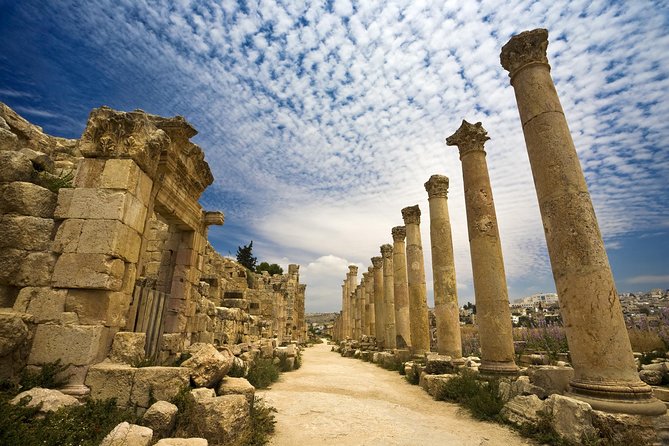
- Jerash is the star attraction: Allow around three hours for Hadrian’s Arch, the Oval Plaza, the Colonnaded Street, temples, theaters, and other Roman remains.
- Umm Qais adds views as well as ruins: From Gadara, you can look over the Jordan Valley, the Sea of Galilee, and the Golan Heights.
- Pella is the uncertain stop: It has a long archaeological record, but there may be no local guide, and a previous visit found the site closed.
- Your driver shapes the day: The driver doubles as your guide for the general journey, and the strongest praise went to drivers who were helpful, attentive, and good-humored. One named Amr received especially warm approval.
- Private transport gives you breathing room: Only your group participates, and hotel pickup and drop-off in Amman are included.
- Bring sun protection and good shoes: These are open archaeological sites with plenty of walking and limited comfort infrastructure.
Why this three-site trip is appealing
Jordan has no shortage of ancient remains, but these three places tell different stories. Jerash shows Roman urban planning on a grand scale. Umm Qais offers a more atmospheric mix of Roman, Byzantine, and Ottoman remains. Pella reaches much further back, with evidence of settlement going back more than 8,000 years.
I like the way the trip combines a famous major site with two quieter places. You are not simply checking off the best-known ruin in Jordan. You also get a sense of how cities developed, declined, and were reused across centuries.
The private format matters. You are not tied to the walking speed of a large group, and you can ask your driver to explain the countryside, stop when needed, or help with practical details. The vehicle is air-conditioned, and onboard Wi-Fi is included. After long drives in Jordan, that small comfort can make a real difference.
Still, this is an ambitious day. Jerash, Umm Qais, and Pella are not close together, and the journey takes a sizeable part of the schedule. If you want leisurely museum visits, long meals, or time to sit among the ruins, I would split these sites over two days.
More Umm Qais trips:
- Full-Day Tour: Umm Qais, Jerash, and Ajloun from Amman
★ 5.0 · 162 reviews - Jerash, Ajloun, Umm Qais Day Trip
★ 5.0 · 99 reviews - From Amman: Private Jerash, Ajloun Castle, and Umm Qais Tour
★ 4.9 · 82 reviews
Leaving Amman at 9:00 a.m.
The day begins with pickup at your central Amman hotel. You meet your private English-speaking driver and travel in a modern, air-conditioned vehicle suited to the size of your group.
The driver is more than a chauffeur. The tour information describes the driver as doubling up as your guide during the transfers, while a local guide leads the classic visit at Jerash. This arrangement gives you company and context on the road, but it is not the same as having a specialist guide at every monument.
The schedule lists roughly one hour for the initial departure section, followed by the main stops. Your driver can help keep the day moving, which matters because the route is long. You should still expect several hours in the vehicle, especially on the way to the northern sites and back to Amman.
The private setup also suits families and small groups with different energy levels. You can discuss timing directly with your driver rather than waiting for a large party. Just remember that the route includes exposed ruins and plenty of walking. Comfortable shoes, a hat, and sunscreen are practical necessities, not packing suggestions to ignore.
Jerash: The Roman city that earns the extra time
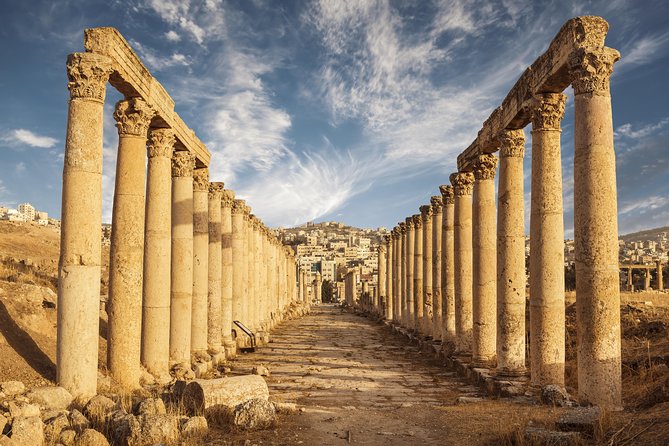
Jerash is the strongest reason to book this outing. The ancient city, known in Roman times as Gerasa, is among the best-preserved Roman archaeological sites in the Middle East. It is often described as the Pompeii of the East, though that comparison can make it sound smaller and more compact than it is.
The visit begins at Hadrian’s Arch, the monumental gateway built for Emperor Hadrian’s visit. From there, a local guide takes you into the site and explains how the city worked. This is useful because Jerash is not just a collection of attractive columns. Its streets, public squares, temples, theaters, baths, and fountains reveal a planned city built for civic life and trade.
The Oval Plaza is the visual centerpiece. Its unusual egg shape is framed by standing columns and opens into the city’s main route. It is an excellent place to pause and understand the scale of ancient Gerasa before moving onward.
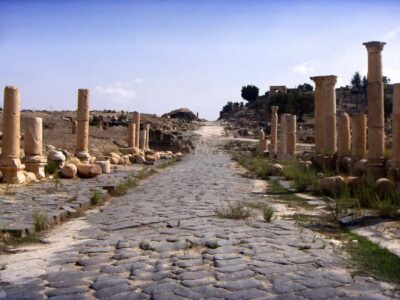
From the plaza, you walk along the Colonnaded Street, also called the Cardo. The long avenue helps you see how Roman cities connected major public buildings. Your guide can point out details that are easy to miss when you walk alone, including the relationship between the street, temples, theaters, and other public spaces.
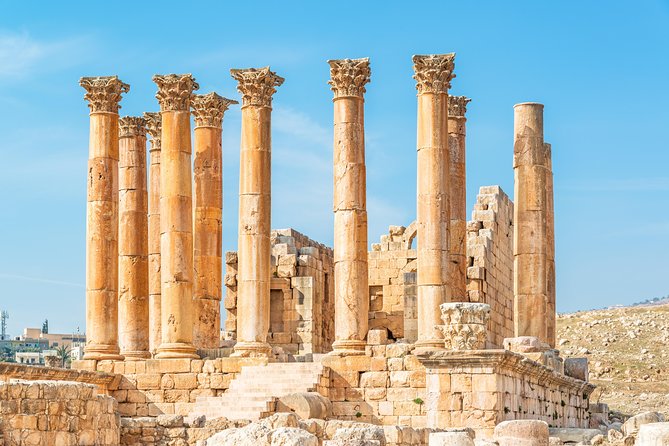
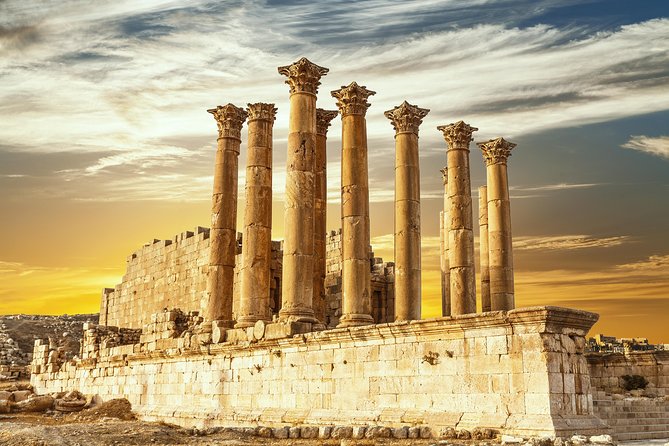
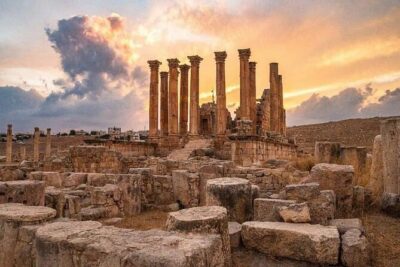
The itinerary also includes the Temples of Zeus and Artemis and the Hippodrome, where chariot races once took place. The site’s remains are unusually readable, so you do not need a vivid imagination to picture its ancient form. That is a major advantage for anyone who finds less-preserved ruins frustrating.
Plan on about two hours for the formal visit and another hour around the Oval Plaza and main highlights. In practice, you may want every minute available. Jerash rewards a slower pace, but the packed route means you should keep an eye on the clock.
The human side of this stop has also been a major strength. The driver Amr received especially warm praise for making the day fun, helpful, and comfortable. Another account singled out a driver who was attentive to personal needs and maintained a good attitude throughout the tours. Those details matter on a long outing. A pleasant driver cannot change the distance between sites, but he can make the transfers feel much easier.
Umm Qais and Gadara: Ruins with a remarkable view
After Jerash, the route continues toward Umm Qais and the remains of Gadara, another city of the ancient Decapolis. The Decapolis was a group of self-governing cities on the eastern frontier of the Roman Empire. Gadara was part of that network, and its location helped connect the site to the wider Roman world.
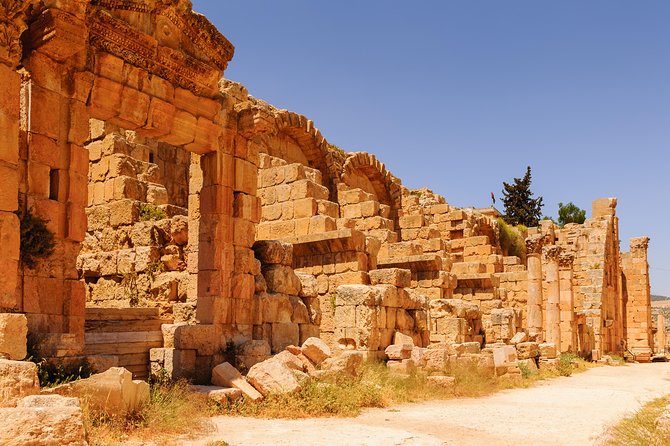
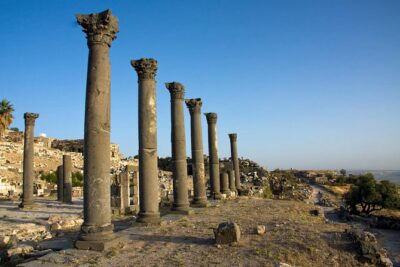
Umm Qais feels different from Jerash. The ruins lie on a hillside, mixed with the remains of an abandoned Ottoman village. That combination gives the site a less polished, more layered character. You are looking at Roman and Byzantine remains beside later stone buildings, with several periods occupying the same ground.
The views are a major part of the visit. From the hillside, you can see across the Jordan Valley toward the Sea of Galilee and the Golan Heights. These distant views help explain why Gadara was important, but they also give you a welcome break after the more enclosed urban scale of Jerash.
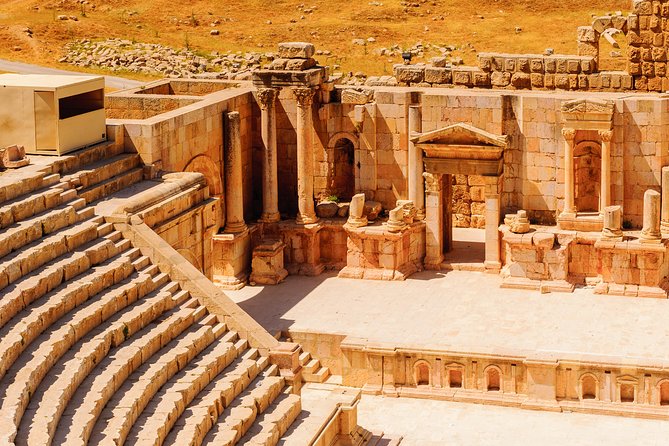
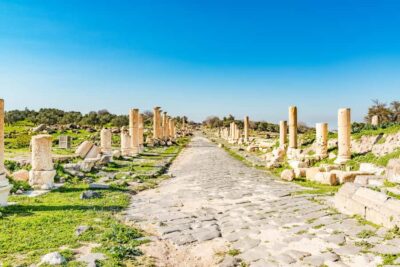
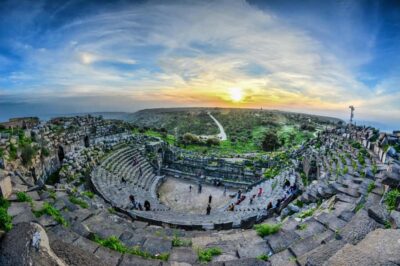
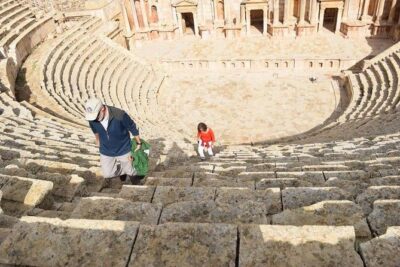
A local guide can lead you along an old street to the Roman Theater, which seated about 3,000 people. The theater is one of the clearest focal points at the site. You also see the Byzantine Basilica, with its unusual octagonal altar, and walk along the Cardo Maximus, the main colonnaded street.
The on-site museum is housed in a restored Ottoman governor’s palace. It contains objects recovered from the ruins, including mosaics and marble statues. I like this part of the stop because it gives you smaller, more tangible details after the large outdoor monuments.
There is one practical point to clarify before you go. A local guide at Umm Qais may be available, but this is not guaranteed, and the guide’s fee is paid directly by you. The tour includes a local guide for Jerash, but not a guaranteed guide at Umm Qais. Your driver can help arrange one if available.
The schedule allows about three hours here, including the ruins and museum. That is enough for a useful visit, but the amount of walking and the open setting can make the stop tiring in hot weather. Take water, use sunscreen, and do not treat the views as an optional extra. They are one of the best reasons to come this far north.
More Jerash and Ajloun day trips:
- Private Tour of Ajlun and Jerash
★ 5.0 · 130 reviews - Half Day Tour To Jerash From Amman.
★ 4.9 · 90 reviews - Jerash, Ajloun, and Umm Quais Full-Day Tour
★ 5.0 · 78 reviews - From Amman: Private Full Day Tour Jerash Ajloun & Um Qais
★ 5.0 · 77 reviews
Pella: Ancient settlement, uncertain payoff
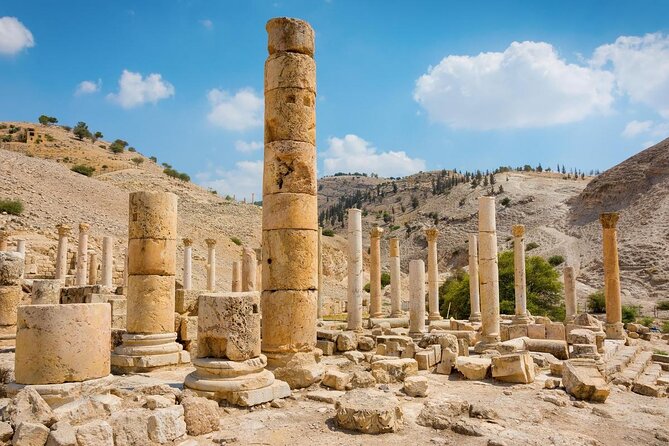
Pella is the most difficult stop to judge. Its archaeological record reaches back more than 8,000 years, and the location includes settlements from several periods. The site was first recorded by the Egyptians in the 19th century B.C. under names such as Pihilum or Pehel.
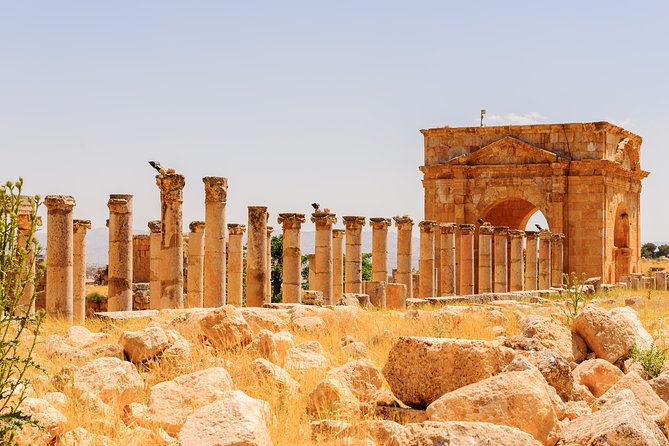
The later Hellenistic and Roman remains add another chapter. When the Romans arrived, Pella developed temples, theaters, and baths. You can see the remains of this long sequence of settlement, but the site does not offer the same immediate visual impact as Jerash.
There is also no local guide at Pella. Your driver can get you there and help with the general flow of the day, but you should not expect a guided explanation among the ruins. If archaeology and long historical timelines interest you, that independence may suit you. If you need clear interpretation to appreciate a site, Pella may feel thin.
The biggest concern is operational. One previous visit found Pella closed, with no one available at the entrance, resulting in about two hours of travel for no meaningful visit. That is not presented as a standard outcome, but it is a serious warning because the site is a substantial detour. I would contact the operator before departure to confirm that Pella is open, even though the booking information asks you to reconfirm pickup arrangements rather than specifically promising a same-day site check.
The itinerary gives Pella about three hours, including the drive and visit. That amount of time makes sense on paper, but the stop’s value depends heavily on access and your personal interest. For many people, Pella will be the least memorable part of the day. For anyone interested in the earliest stages of settlement in Jordan, it may be precisely the stop that makes the route worthwhile.
What $160 per person actually buys
At $160 per person, this is not a budget outing. The value depends on group size, because you are paying for private transport and service rather than simply a seat on a bus.
The price includes hotel pickup and drop-off in Amman, a private air-conditioned vehicle, an English-speaking driver, onboard Wi-Fi, the Jerash local guide, and entrance fees for Jerash, Umm Qais, and Pella when you select the option with admission included. Meals, drinks, tips, personal expenses, and any guide hired directly at Umm Qais cost extra.
For a couple, the total can feel high. For a family or small private group, the ability to share the vehicle and control the day improves the value. You also avoid the work of arranging transport between three northern sites, which is the main service this tour provides.
Jordan Pass holders should pay close attention to the booking option. If you bought a Jordan Pass and also selected an activity with entrance fees, you should tell the operator so those fees can be reimbursed at the destination. Arab and Gulf Cooperation Council nationals receive different entrance pricing advice, so the option with included admission may not be the best fit for them.
Lunch is not included unless you choose an option that adds it. Vegetarian meals can be requested. Local restaurants generally do not serve alcohol, so contact the operator ahead of time if that point matters to your meal plans.
Tips for the driver and local guide are not included. They are recommended, so you should budget for them when comparing the total cost.
Timing, comfort, and the real pace of the day
The advertised duration is about 10 hours, starting at 9:00 a.m. and ending with hotel drop-off in Amman. That is a long day, but the private vehicle makes it more manageable than a rigid group coach.
The schedule is still tight. Jerash alone deserves several hours, Umm Qais includes a museum and multiple ruins, and Pella requires more driving. You will spend much of the day moving between places, not only walking through them.
I would book this tour when seeing all three sites in one day matters more than a relaxed rhythm. You should be comfortable with early momentum, exposed sun, and a late return. If you have limited time in Jordan, the route covers a lot of ground efficiently.
I would not choose it for someone who has difficulty with long vehicle journeys or uneven walking without first contacting the operator. Clients with mobility concerns are asked to get in touch, and that is sensible. The sites differ in terrain, so your needs should be discussed before booking.
Free cancellation is available up to 24 hours before the start time. Changes made less than 24 hours before departure are not accepted, and poor weather can lead to a different date or a full refund.
Who should book this northern Jordan route?
I think this tour suits you best if you want private service, archaeological variety, and a full day away from Amman. It is especially useful for small groups, families, and first-time visitors who want transport and admission handled in one arrangement.
It also suits anyone who wants Jerash with a guide. The local guide helps turn the ruins into a functioning Roman city rather than a field of columns. The positive experience connected with the guide and drivers is a meaningful strength of the trip.
I would hesitate if Pella is your main reason for booking. Its age and archaeological importance are real, but the lack of a local guide and the possibility of closure make it the least secure part of the route. If you mainly want the best-preserved Roman remains, a private Jerash visit with more time there may give you a better day.
Should you book the Jerash, Umm Qais, and Pella tour?
Book it if you want to cover three northern Jordan sites in one private day and you accept that the schedule will be demanding. Jerash is the clear highlight, Umm Qais adds the finest views and a striking Roman theater, and Pella offers a more specialist archaeological stop.
Before departure, reconfirm pickup details and ask specifically whether Pella is open. Confirm the entrance-fee option if you hold a Jordan Pass, and ask about a local guide at Umm Qais if that matters to you.
For many groups, the combination of private transport, hotel service, strong driver support, and included admission justifies the price. For a slower, more polished archaeological experience, choose fewer sites. For a broad, memorable day that reaches well beyond Amman, this route is worth considering.
FAQ
What time does the tour start?
The scheduled start time is 9:00 a.m., with pickup at your central Amman hotel.
How long does the experience last?
The trip lasts approximately 10 hours, including transportation between Amman, Jerash, Umm Qais, Pella, and the return to Amman.
Is hotel pickup and drop-off included?
Yes. Pickup and drop-off at hotels in Amman are included. Airport pickup and drop-off may be arranged by request.
Is the tour private?
Yes. Only your group participates in the activity, and private transportation is provided in an air-conditioned vehicle suited to the group size.
Are entrance fees included?
Entrance fees for Jerash, Umm Qais and its museum, and Pella are included when you select the option with entrance fees. Jordan Pass holders should inform the operator so eligible fees can be reimbursed at the destination.
Are local guides included at every site?
A local English-speaking guide is included for the classic visit to Jerash. A guide at Umm Qais may be available and can be hired and paid for directly. Pella does not have local guides.
What should I bring?
Bring a hat, sunscreen, and comfortable walking shoes. Meals and drinks are not included unless you select an option with lunch, and tips and personal expenses are separate.
Just added around Amman
- Amman Airport Private Round-Trip Transfer to Amman★ 5.0 · 3 reviews
- Petra Full-Day Private Tour from Amman or Airport★ 5.0 · 3 reviews
- Full Day Amman Old and New Private City Tour★ 5.0 · 3 reviews
- From Amman :Full day Dead Sea and Ma’in Hot spring tour★ 5.0 · 3 reviews
- Jordan’s Gems: Tour from Amman to Karak Castle & Dead Sea★ 5.0 · 3 reviews
- Dead Sea Full Day Tour including Lunch★ 5.0 · 3 reviews
- 2-Night Private Jordan Gem Tour: Petra, Wadi Rum, and Aqaba from Amman★ 5.0 · 3 reviews
- Private Half-Day Ma’in Waterfalls and Hot Springs Tour from Amman★ 5.0 · 3 reviews
Umm Qais Tours, compared.
Full-Day Tour: Umm Qais, Jerash, and Ajloun from Amman
Read our review →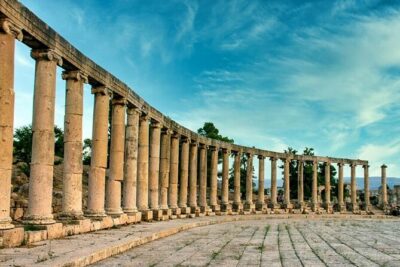
Private Jerash, Ajloun Castle, and Umm Qais Tour
Read our review →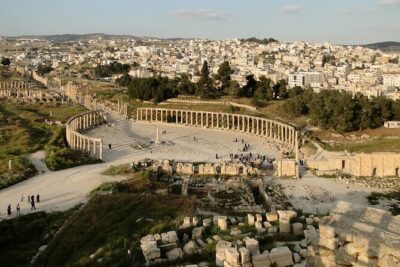
Private Day Trip to Jerash, Umm Qais and Ajloun Castle from Amman
Read our review →Browse the lists this tour appears in