
Reviewed · HIKING & TREKKING
Petra Back-Road Trail and Hike
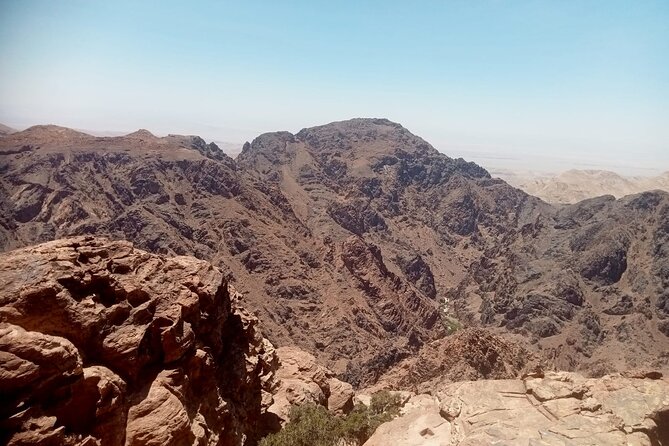
Petra reveals itself from the hills. This 8 to 9 hour hike begins at Little Petra, crosses dramatic mountain country, passes an ancient village and the Siq Ghorab canyon, then reaches Petra’s great Monastery before continuing through the main archaeological area. I like the quieter approach and the way the Treasury becomes the final reward. I also like the private group format, with up to six people sharing the $380 cost.
The catch is the physical effort. You need a moderate fitness level, and the route includes long walking, uneven ground, mountain paths, and more than 800 steps up to the Monastery. One poor account also raises a serious point: the quality of the guiding can make or break a long historical tour, so confirm exactly what sort of guide and transport arrangements you will receive.
In This Review
- Key points at a glance
- Why the Little Petra start changes the day
- The mountain route through Siq Ghorab
- The Monastery and its 800-plus steps
- Walking down through Petra’s old city
- The Street of Facades and Royal Tombs
- Meeting the Treasury at the end
- What the $380 group price really means
- The guide matters more than usual
- Who should book this Petra hike?
- Should you book the Petra Back-Road Trail?
- FAQ
- Where does the Petra Back-Road Trail begin?
- How long does the experience last?
- How many people can join the group?
- Is the hike physically difficult?
- Does the experience include pickup?
- What happens if bad weather cancels the tour?
Key points at a glance
- The back door to Petra: Begin at Little Petra and enter the main site from a less usual direction.
- The Monastery comes first: Reach Petra’s huge hilltop monument before walking down into the old city.
- A full archaeological day: Little Petra, Beidha, the Monastery, Colonnaded Street, Royal Tombs, Treasury, Nymphaeum, and Byzantine Church all appear along the route.
- Private group value: The $380 price covers up to six people, making the per-person cost much better for a full group.
- Views beyond Petra: The route includes a panorama toward Wadi Araba and the mountains of the West Bank.
- Plan for a real hike: This is not a short sightseeing walk. Good shoes, water, and steady legs matter.
Why the Little Petra start changes the day
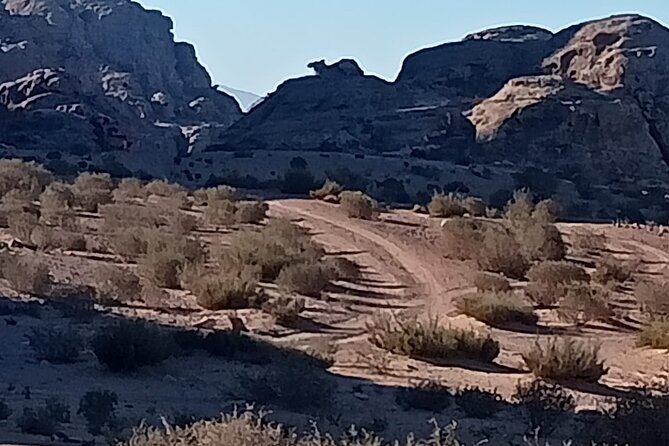
Most people meet Petra through the famous Siq leading to the Treasury. This route takes a different approach. You begin at Little Petra, also called Siq al-Barid, then walk through the mountains toward the main site.
Little Petra is much smaller than Petra’s main Siq, but it gives you a useful first look at Nabataean rock-cut architecture without the same sense of arrival. The canyon is narrow in places and opens into wider pockets containing temples and old carved rooms. You can see painted houses and older structures cut into the sandstone.
The name Siq al-Barid means cold canyon, a practical reference to the shade created by the rock walls. It is not a second Petra, and you should not expect the same number of monuments. Its value is in the setting and in the slower start. You get a feel for how people shaped buildings, chambers, and places of worship directly into the rock.
The first stop lasts about two and a half hours and includes the Neolithic Village of Beidha. Beidha is important because it contains one of Jordan’s oldest settlements, dating to the Neolithic period. The site connects Petra to a much earlier time, when seasonal communities of hunters and gatherers lived in this area.
I like this opening because it gives the day more depth than a simple monument checklist. You are not only seeing Nabataean Petra. You are also seeing traces of settlement from thousands of years earlier.
More ways to see Petra:
- Amman: Petra, Wadi Rum, and Dead Sea 2-Day Tour
★ 4.9 · 1,173 reviews - 2-Day Tour: Petra, Wadi Rum, and Dead Sea from Amman
★ 5.0 · 1,141 reviews - From Amman: Petra & Wadi Rum Private or group Day Tour
★ 4.9 · 750 reviews
The mountain route through Siq Ghorab
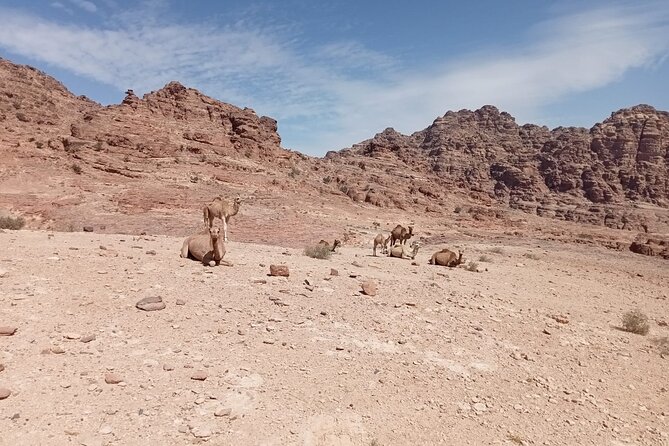
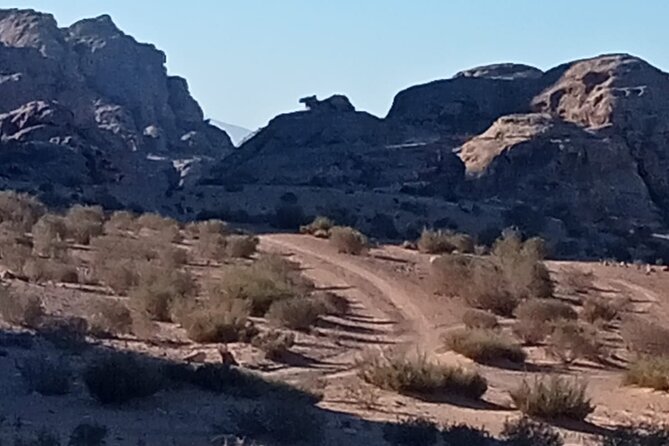
From Little Petra and Beidha, the route heads toward the main Petra site on foot. This is the part that gives the tour its character. You move through mountain scenery rather than arriving by the standard entrance and following the usual crowd toward the Treasury.
The route passes an old village with remains of people who lived here many thousands of years ago. The site is called Shamasah and is reached through a large canyon known as Siq Ghorab. These names matter because they help turn the walk into a connected route rather than a series of unrelated stops.
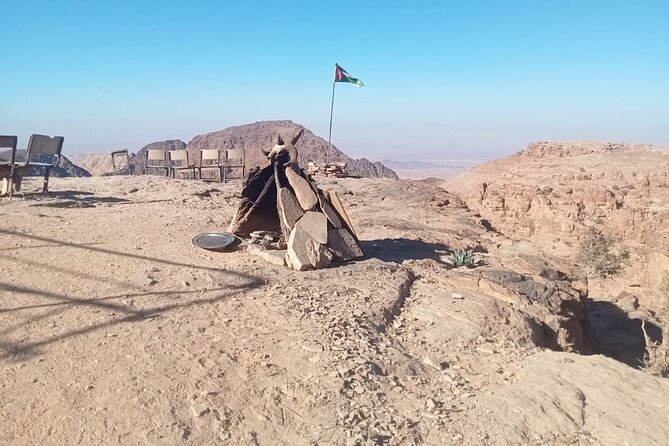
The setting is a major reason to choose this experience. You see broad mountain views, changing rock formations, and a more open side of Petra before the monuments begin to crowd together. The route also leads to a panoramic viewpoint over Wadi Araba and the mountains of the West Bank.
Do not mistake the quieter route for an easy one. The tour description gives a moderate fitness rating, but eight or nine hours on mountain paths is still a demanding day for many people. The exact hiking pace is not provided, so ask before booking if you are concerned about steep sections, rest breaks, or the amount of time spent walking before reaching the Monastery.
The Monastery and its 800-plus steps
The Monastery, known as Al Dayr, is the main prize of the back route. It is one of Petra’s largest monuments, measuring roughly 47 meters wide by 48.3 meters high. Other measurements supplied for the monument give a similar scale, about 50 meters wide and 45 meters high.
The building was probably constructed as a Nabataean tomb in the third century BCE. Its design resembles the Treasury, but the Monastery is larger and more isolated in the hills. Crosses carved into the interior walls suggest that Byzantine residents later used it as a church. That later use explains the name Al Dayr, or the Monastery.
The final approach begins near the Basin Restaurant and follows an old rock-cut route with more than 800 steps. The climb is part of the experience, but it is also the clearest warning in the itinerary. You need comfortable shoes and enough energy to keep going after the earlier mountain walk.
Allow about two hours at the Monastery. That is enough time to reach the monument, look closely at the facade, take in the mountain views, and recover before heading onward. The Monastery rewards patience. Its large facade is less delicate than the Treasury, but its isolated position gives it a stronger sense of scale.
I would not choose this route if your main goal is a short, gentle introduction to Petra. I would choose it if you want the Monastery to be the first major monument of the day and you enjoy reaching famous places by foot.
Walking down through Petra’s old city
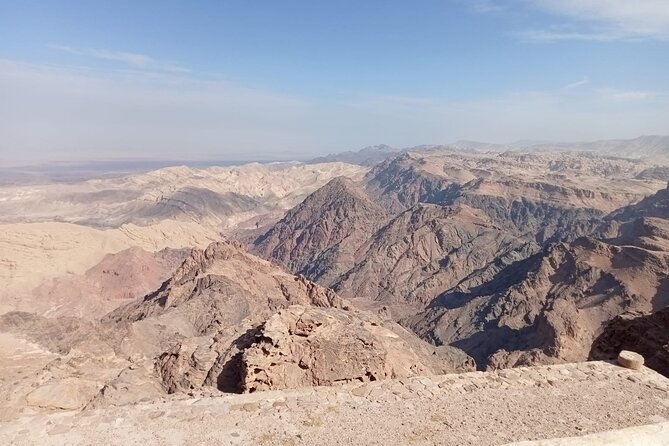
After the Monastery, the route continues into the central archaeological area. This direction is useful because you see the Monastery first, then move through a chain of major sites rather than spending the entire day waiting for the Treasury reveal.
The Colonnaded Street is an old Nabataean road later rebuilt during the Roman period. It was restored to a width of about six meters, and excavations indicate that buildings of one or two stories once lined the route. At its end is a triple gate leading toward Qasr Al-Bint, one of Petra’s major sanctuaries.
The street takes about an hour in the planned schedule. Today, you mostly see foundations, columns, and scattered remains, so a guide’s explanation is particularly useful here. Without context, it can look like a broad strip of stones. With context, you can picture a working city with shops, public buildings, and formal routes through the center.
The Nymphaeum comes next. This was a public fountain along the Colonnaded Street. Only the foundations remain, shaded by a tree, and the stop lasts about ten minutes. It is a small pause rather than a headline monument, but it helps show the public infrastructure of ancient Petra.
The Byzantine Church also receives about ten minutes. Its ruins date from the sixth or eighth century, according to the supplied information, and the structure was not found until the 1990s. It was built with materials used during Nabataean and Roman times, including reused windows, doors, and reliefs.
That later church is a good reminder that Petra did not simply vanish after its Nabataean period. The city continued to change, and later communities adapted earlier buildings and materials.
More hikes and treks:
- Dana to Petra Trek + Wadi Rum & the Dead Sea – 9 Days
★ 5.0 · 165 reviews - Petra to Wadi Rum Trek – 6 Days
★ 5.0 · 11 reviews - Jordan Trail: Dana to Petra 4-Day Trekking Tour
★ 4.4 · 7 reviews - Full Day Desert Tour, Jeep & Hiking
★ 5.0 · 98 reviews
The Street of Facades and Royal Tombs

The Street of Facades offers a closer look at several tombs cut into the rock. One notable example is Tomb 67, which has a funeral chamber on its upper level. Unlike many parts of Petra, these tombs are relatively easy to access.
The planned visit lasts about half an hour. You can examine the carved fronts and chambers without needing a long additional climb. This is a good place to slow down and look at the variety of facades rather than rushing straight to the Treasury.
The Royal Tombs rise above the center of Petra on the western slope of Jabal al-Khubtha. This group includes the Urn Tomb, Silk Tomb, Palace Tomb, Corinthian Tomb, and the Tomb of Sesto Fiorentino.
Reaching the Royal Tombs requires stairs, beginning with the climb to the Urn Tomb. The Urn Tomb later served as a place of worship during the Byzantine period. The Silk Tomb takes its name from the deep shades in its sandstone, while the Palace and Corinthian Tombs are known for their large and elaborate fronts.
The planned time is about an hour, but the schedule does not include admission for this stop. That is one of several details you should clarify before paying. The tour lists admission as included at some stops and not included at others, so ask whether your Petra entrance ticket, local fees, and any required site charges are covered in the $380 price.
Meeting the Treasury at the end
The Treasury, or Al Khazna, is the emotional high point of the route. After approaching Petra from the back, walking to the Monastery, and passing through the old city, you finally reach the famous facade from inside the Siq.
The Treasury is about 40 meters high. Its carved exterior includes Corinthian capitals, friezes, figures, and three chambers, one central and two on the sides. The building has two levels and is about 25.3 meters wide according to the supplied measurements, while another figure gives its height as 39.1 meters.
The name Treasury comes from local folklore about the urn at the top, which was said to hold a pharaoh’s treasure. The urn is actually understood as a royal memorial, and the building was probably constructed in the first century BCE, though its original purpose remains uncertain.
The scheduled visit lasts about an hour and a half. That is generous compared with the short stops at the Nymphaeum and Byzantine Church. You have time to stand back, study the facade, and take in the way the Treasury appears within the narrow Siq.
The route ends at the Petra Visitor Center. This finish is practical if you have arranged pickup there or need to return to your accommodation. The experience does not appear to include a late evening program or Petra by Night.
What the $380 group price really means
The cost is $380 per group of up to six people. For six people, that works out to about $63 per person. For two people, it becomes $190 each, so the value depends heavily on group size.
For a full group, the price can make sense because you are paying for a long private experience with a pickup option, a mountain route, and a guide through several major archaeological areas. You also avoid following only the standard entrance path.
For a couple, the cost is harder to justify unless the back-road approach is a priority. You should compare it with a shorter guided Petra tour or a standard visit with a local guide. The special value here is not simply the number of monuments. It is the route design, the access from Little Petra, and the chance to see the Monastery before the Treasury.
The experience is booked an average of 22 days ahead, so planning early is sensible, especially if you need a particular date. The start time is 9:00 a.m., and pickup is offered, though you can also meet at Little Petra. Confirm the exact pickup area and whether transport returns you to the Visitor Center or continues elsewhere.
The guide matters more than usual
A long route through Petra needs clear communication. You want a guide who can explain the Nabataean, Roman, and Byzantine remains without turning the day into a rushed march.
The overall rating is 4.2 from five ratings, with strong praise for the back-door route, mountain scenery, and the way the Treasury serves as the final arrival. One very negative account says the guide did not provide the expected professional historical context. That criticism should not be brushed aside.
Before booking, ask who will guide the group, what languages are offered, how much historical explanation is included, and whether the guide walks the entire back route with you. Also confirm the plan for the Petra entrance ticket and the Royal Tombs, since the listed admission details are not uniform.
Who should book this Petra hike?
I would recommend it to you if you:
- Have already seen Petra’s standard route and want a different approach
- Want the Monastery to be a major part of the day
- Enjoy long walks, mountain paths, and big views
- Can share the price with a group of four to six people
- Prefer a private experience with pickup available
- Want to connect Little Petra, Beidha, and the main archaeological site in one day
I would be cautious if you have limited mobility, dislike steep stairs, or want a relaxed two or three hour visit. The 800-plus steps to the Monastery come after the route from Little Petra, not before it. You should also be comfortable spending most of the day outdoors.
The tour allows service animals and operates near public transportation, but the route itself remains physically demanding. The weather also matters. If poor weather forces cancellation, you can choose another date or receive a full refund.
Should you book the Petra Back-Road Trail?
Book it if the journey matters as much as the monuments. The strongest feature is the route from Little Petra through Siq Ghorab and the mountain country to the Monastery, followed by Petra’s central sites and the Treasury. That sequence gives the day a satisfying shape.
The main risk is not the scenery. It is the physical demand and the need for a reliable guide. Ask direct questions about guiding, tickets, transport, and walking conditions before you commit. If you are fit and can fill most of the six-person group, this is an appealing way to see Petra from a quieter and more dramatic angle.
FAQ
Where does the Petra Back-Road Trail begin?
You can be picked up at the beginning of the experience or meet the group at Little Petra, also called Siq al-Barid. The scheduled start time is 9:00 a.m.
How long does the experience last?
The hike and sightseeing day lasts approximately eight to nine hours.
How many people can join the group?
The experience accepts a maximum of six people and costs $380 per group.
Is the hike physically difficult?
A moderate level of physical fitness is recommended. The route includes mountain walking and more than 800 steps leading to the Monastery.
Does the experience include pickup?
Pickup is offered. You can also meet at Little Petra, but you should confirm the exact pickup details when booking.
What happens if bad weather cancels the tour?
The experience requires good weather. If it is canceled because of poor weather, you can receive a full refund or choose a different date.
Just added around Petra
- Petra Full-Day Private Tour from Amman or Airport★ 5.0 · 3 reviews
- Petra Highlight Tour with Private Guide Sami Nawafleh | 2.5 Hours★ 5.0 · 3 reviews
- 2 Hour Trail Ride to Little Petra-Morning or Sunset★ 5.0 · 3 reviews
- 2 Days Private Tour to Wadi Rum and Petra from Eilat★ 5.0 · 3 reviews
- 2-Night Private Jordan Gem Tour: Petra, Wadi Rum, and Aqaba from Amman★ 5.0 · 3 reviews
- Full-Days Tours Petra from Amman★ 5.0 · 3 reviews
- Queen Alia Airport Transfers From / To Amman, Petra, Dead Sea.★ 5.0 · 3 reviews
- Jordan Pass 2- Night Private Secret Escape Tour Petra, Wadi Rum, & the Dead Sea★ 5.0 · 3 reviews
Hiking & Trekking, compared.
Dana to Petra Trek + Wadi Rum & the Dead Sea – 9 Days
Read our review →
Camping and Hiking Adventure : Discovering the south
Read our review →
Half-Day Jeep and Hiking Bedouin Tour from Wadi Rum Village
Read our review →Browse the lists this tour appears in